Liberata
1813
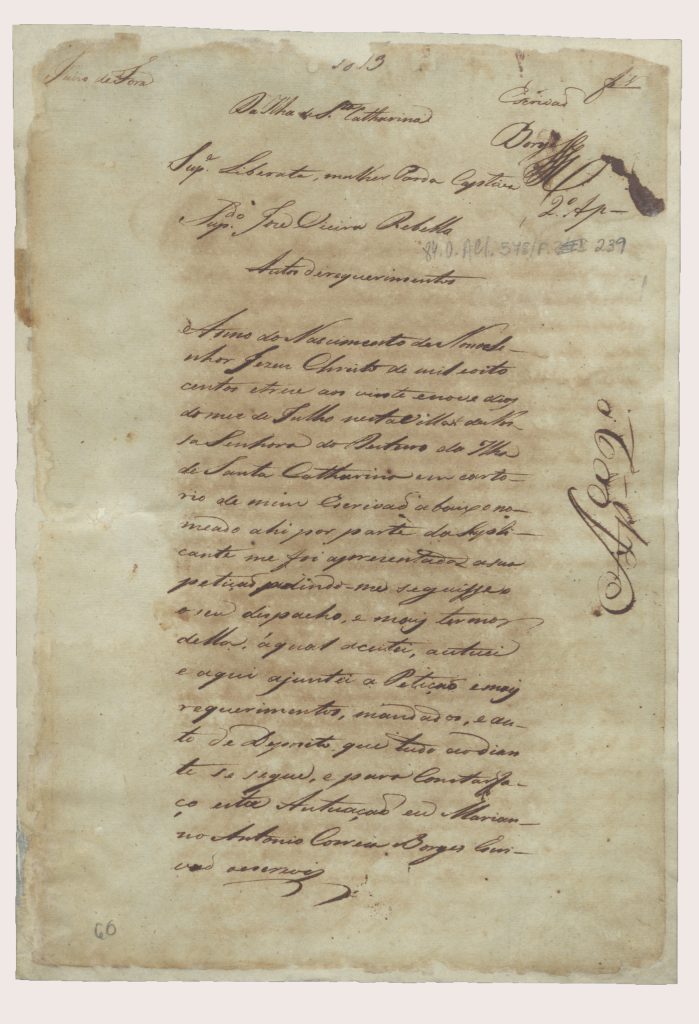
Liberata was born in Brazil around 1780. From a very young age, she was subjected to harassment by her alleged master, who promised her freedom without ever fulfilling that promise.
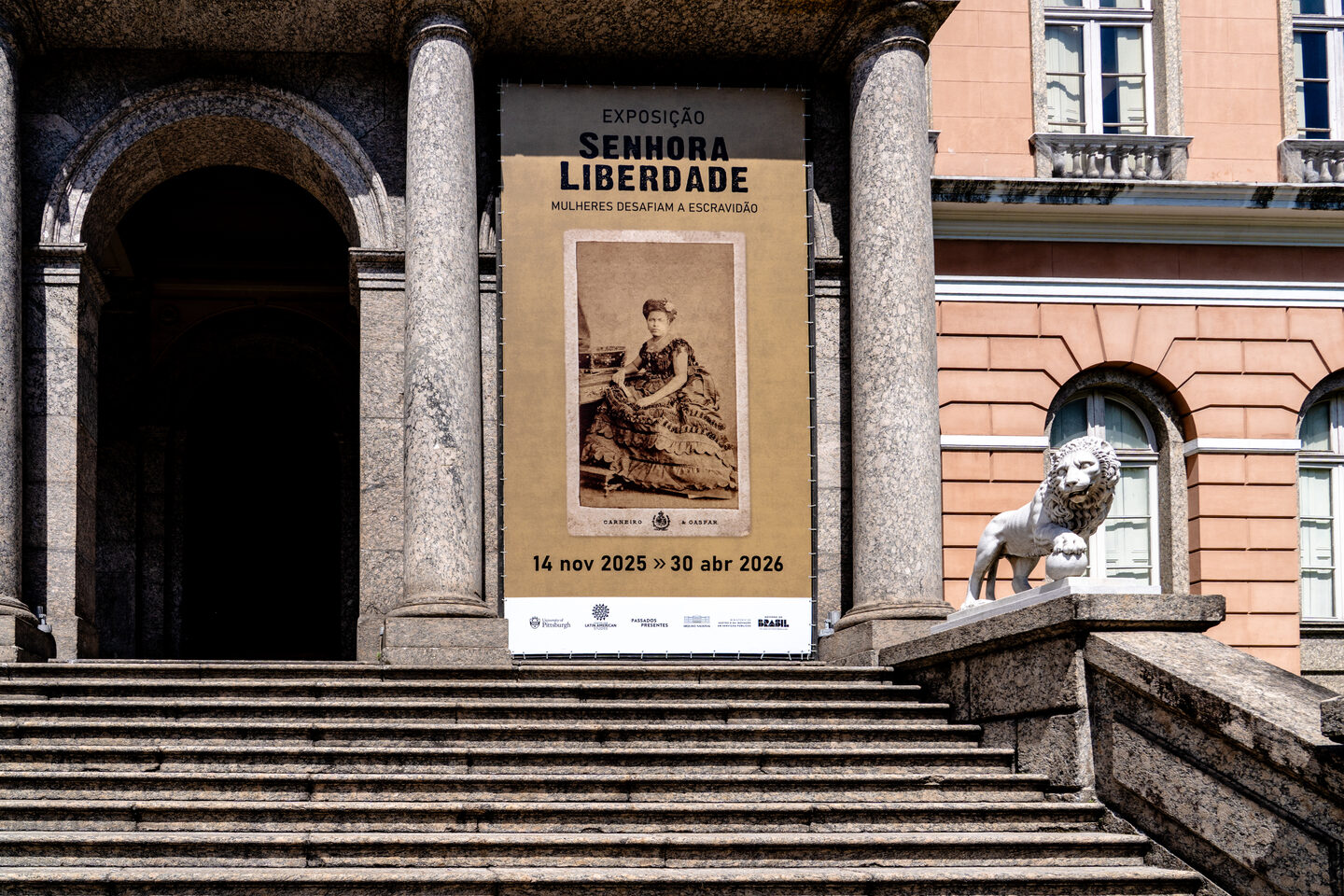
Women Defy Slavery
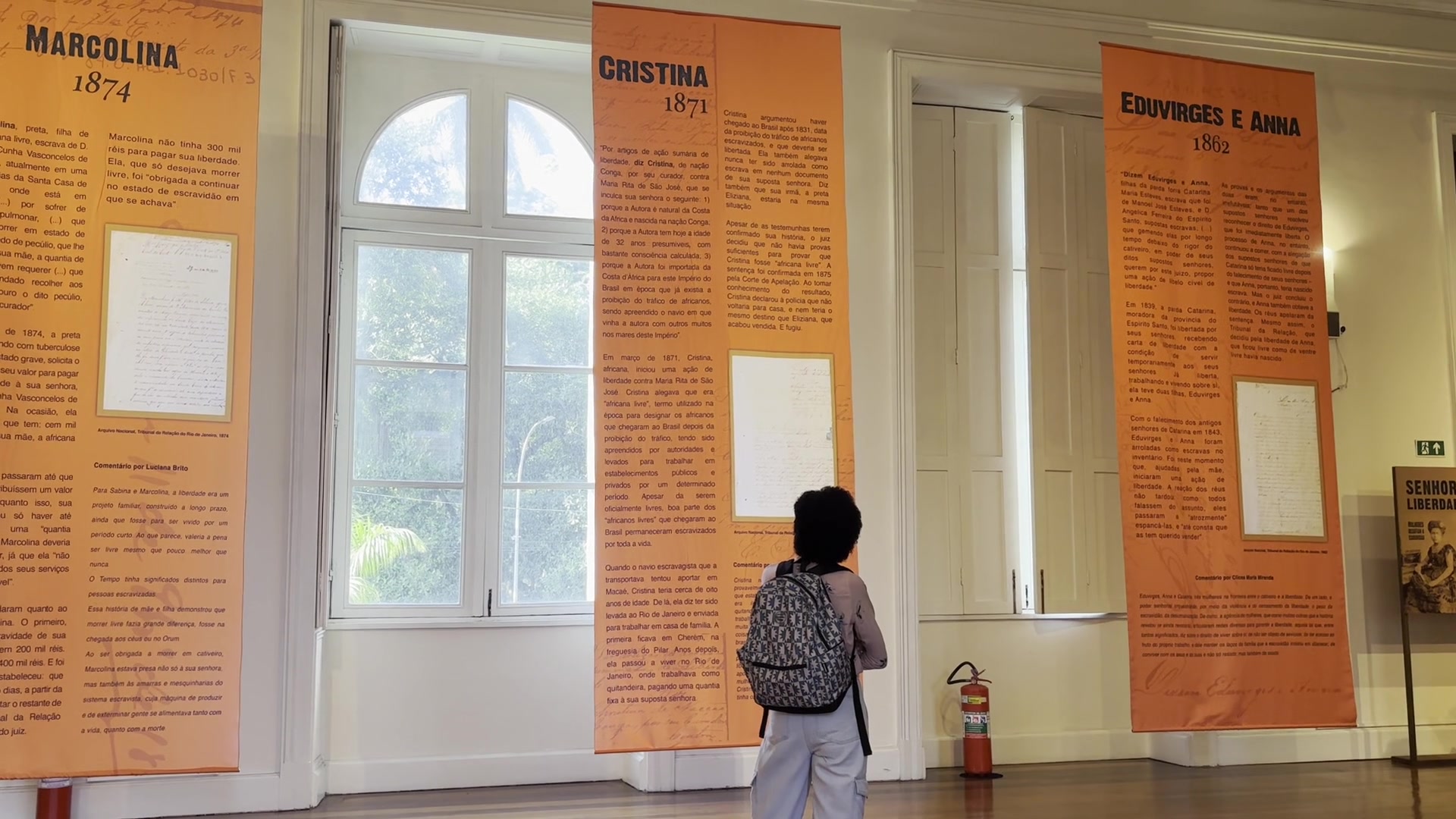
The exhibit “Senhora Liberdade: Women Defy Slavery,” a partnership between the Center for Latin American Studies at the University of Pittsburgh and the National Archives of Brazil, tells the story of enslaved women’s struggles for freedom in 19th-century Brazil through freedom lawsuits, records of manumission, letters of emancipation, and photographs.
The exhibition offers multiple layers of reflection: that of enslaved women and their strategies for fighting for freedom; that of the invited historians, who analyze these life stories in the context of nineteenth-century Brazil; and that of the staff members of the National Archives, of Brazil who share testimonials and insights about these stories.
Now it’s your turn to learn about the project, reflect on Brazil’s history of slavery, and engage with the memories of slavery in Brazil.
Within the historical records of Brazil, some voices persist in being heard—even when silence appeared to be imposed. This exhibition is dedicated to the voices of Black women who, in the 19th century, forged spaces—often limited and marked by obstacles—to assert the freedom that had always been rightfully theirs.
At the National Archives of Brazil, we safeguard far more than documents. We preserve memories, struggles, and journeys. As we open the boxes of history, we encounter petitions written in hope, judicial decisions that at times defied the logic of their era, and narratives of courage in the face of a profoundly unjust system.
We invite visitors to discover the stories of women who dared to confront slavery. They not only challenged the slaveholding regime but also left enduring marks on the history of law, citizenship, and the struggle for justice in Brazil.
By presenting these stories—all grounded in documents preserved at the National Archives—we reaffirm our commitment to honoring the struggles for justice and to upholding fundamental rights. May each visitor recognize not only the past, but also the enduring strength of Black women who transformed their condition of oppression into acts of affirmation and resistance.
Monica Lima, Director-General of the National Archives
Freedom—a feminine noun in Portuguese. Freedom, the force that nourishes the human dream. Freedom, which, as a white Brazilian poet once wrote, cannot be explained, yet is understood by all. The Black women living during the era of slavery always knew this truth.
This exhibit tells the stories of ten of these extraordinary women. They challenged slavery by bringing legal actions against their alleged masters. They were mothers and daughters, children and grandmothers.They were women who dared to carry their demands for freedom into the courts. Some prevailed; most did not. These are stories of suffering and injustice—but, above all, of courage. To these are added the journeys of countless other women—African and Brazilian; wet nurses and wage earners—each, in his own way, a figure of resistance.
Historians and archivists were invited to reflect upon these stories. We are women of the present, learning from the women of the past. May they inspire us to confront the struggles of our own time. May they encourage us to persist. May they remind us that the voice of freedom must also be the voice of equality. And may both, at last, spread their wings over us.
Keila Grinberg, curator
Click on a name to discover each story.
1813
Liberata was born in Brazil around 1780. From a very young age, she was subjected to harassment by her alleged master, who promised her freedom without ever fulfilling that promise.
1836
In 1836, Catarina Maria had been living as a free woman for over eleven years when the loss of her letter of manumission paved the way for a new attempt to enslave her.
1862
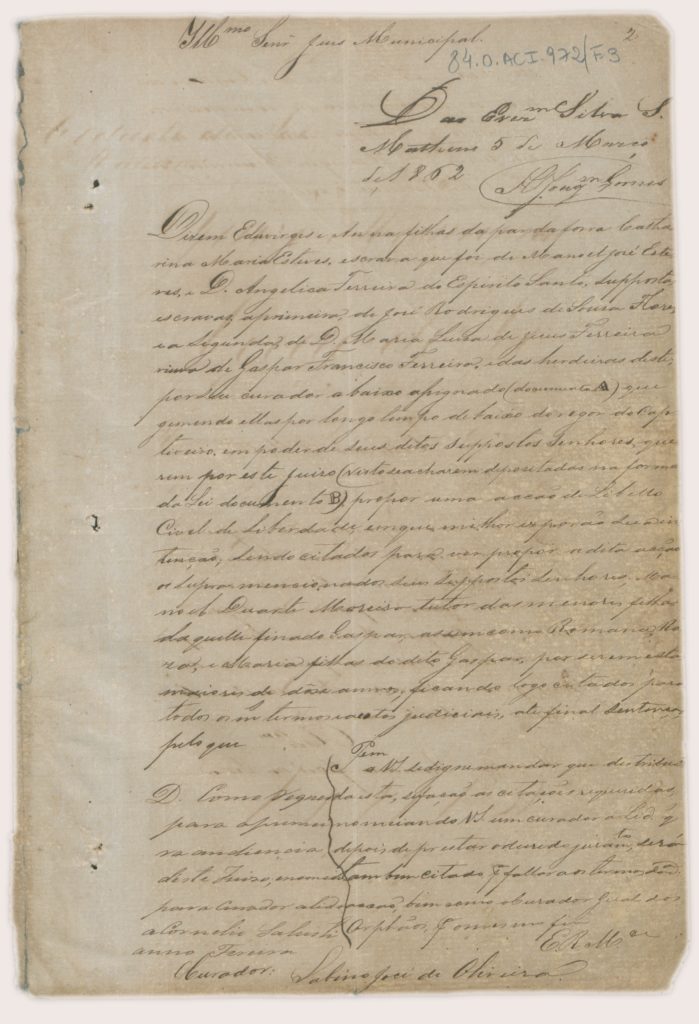
After the death of their mother’s former masters, Eduvirges and Anna were included as slaves in an estate inventory and initiated a legal action for freedom.
1871
In 1837, the document preserved under the name of Cristina recalls an experience shaped by the conflict between the violence of captivity and the quest for legal recognition.
1872
In 1872, the manuscript associated with Bonifácia preserves the trace of a woman whose journey is part of the many forms of resistance to slavery.
1874
In 1824, the handwritten lawsuit connected to Marcolina reveals the persistence required to have one’s own experience recognized in court.
1875
In 1803, the record of Eva and Maria brings two lives to the center of a story where family ties and freedom could be contested in official spaces.
1883
In 1803, the document linked to Adriana offers a glimpse into a story of confrontation in which the pursuit of freedom required turning one’s own life into evidence.
1888
In 1888, Hermínia’s lawsuit preserves fragments of a journey that challenged the erasure imposed by slavery.
1888
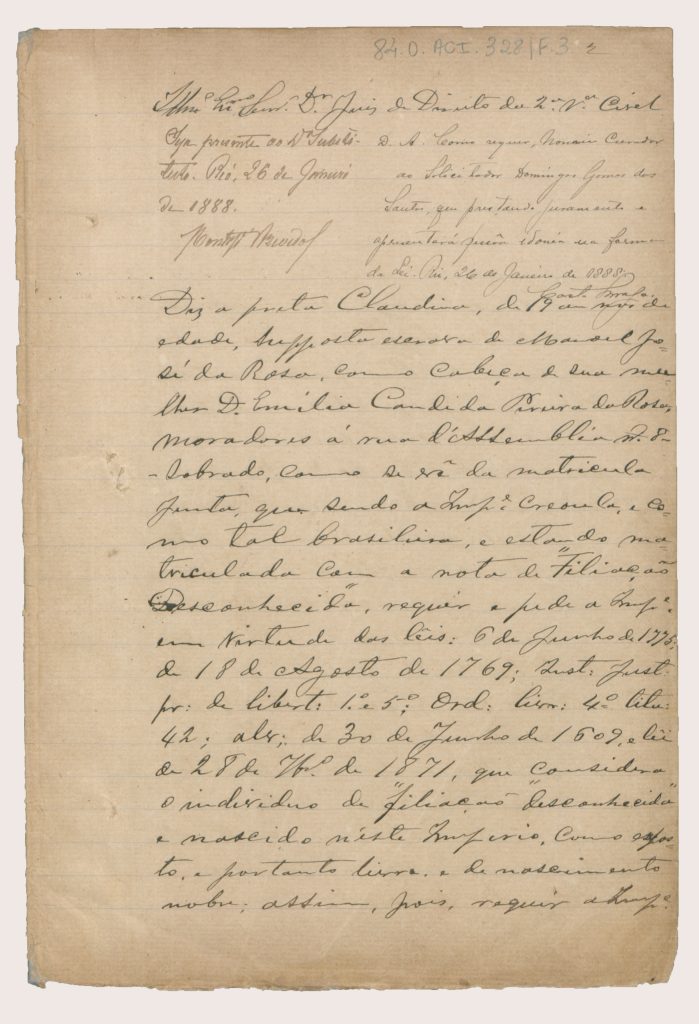
In 1888, Claudina’s document preserves the memory of a struggle that, like so many others, had to overcome the boundaries imposed by captivity and the justice system.
1813
1813
Liberata was born in Brazil around 1780. From a very young age, she was subjected to harassment by her alleged master. Vieira sexually assaulted her and promised to grant her freedom; even after she bore two children, he never fulfilled that promise.
Years later, Liberata became involved with another man, also named José, who offered her marriage and the purchase of her freedom. Vieira permitted neither. It was then that Liberata resolved to initiate a legal action to assert her manumission.
Vieira ultimately promised Liberata her freedom if she abandoned her legal struggle. In 1814, after securing her liberty, Liberata married and had two more children, José and Joaquina. Unable to raise them herself, she entrusted the children to Major Antonio Luís de Andrade, who was to care for them and teach José the trade of tailoring. Yet their fate took another turn: upon the major’s death, his widow attempted to sell them as enslaved people. Following their mother’s example, José and Joaquina turned to the courts, asserting that they were free from birth. In 1835, both successfully obtained their manumission.
“Liberata, a mixed-race woman held captive by José Vieira Rebello, a resident of Enseada das Garoupas, states that she, as a supplicant and a miserable, helpless person with no one to take pity on her, (...) begs on her knees (...) so that she may bring to the attention of the High Court the torments of her captivity and the daily abuses she endures without respite. She is unable to find the means to lodge complaints with her guardian, as she is confined in what amounts to a private prison, constantly under surveillance, and deprived of any opportunity of being heard. Having been purchased by her said master in the village of Paranaguá, the supplicant, under ten years of age, upon arriving at his house, was persecuted, and attacked on multiple occasions. He sought to send her into remote and uninhabited woods, all to coerce, through violence and promises (...), her freedom. Ultimately, he violated her honor.”
1836
1836
In 1836, Catarina Maria had been living as a free woman for over eleven years. She resided on Rua do Príncipe do Valongo, in Rio de Janeiro, together with Antonio de Carvalho, also a freedman. Three years before the initiation of the legal proceedings, Antonio and Catarina were victims of a robbery, during which the thieves stole two boxes containing clothing, jewelry, shoes, and two letters of manumission.
Upon learning that Catarina Maria’s letter of manumission had been stolen, Marcelino Guedes de Amorim, brother of her deceased master, accused her of being a runaway slave. He had her arrested, paid her bail, and attempted to sell her.
Catarina then sought justice, obtaining a warrant to be taken to a public warehouse, from which she initiated legal proceedings. She substantiated her case in multiple ways: attaching a copy of her master’s will, presenting witnesses, and submitting a statement from the police chief confirming the theft of the letters of manumission.
Nevertheless, the judge declared the case null because there had been no agreement between Catarina Maria, a freed African woman, and Marcelino Guedes de Amorim, who sought to enslave her. Two years later, the Court of Appeals upheld the original ruling. Catarina’s fate remains unknown.
Read the commentary by Ynaê Lopes dos Santos.
Freedom as a horizon. Struggle as a practice. These are the lessons Catarina’s story imparts. Two guiding principles that illuminate and weave through the history of Brazil’s Black population, and Black women in particular, under slavery. They remind us that the enjoyment of freedom has always been fragile and precarious for those who were not white.
Catarina also teaches that silence was imposed, and that Black women devised diverse strategies to claim the freedom they lived and dreamed of, in a country structured to keep them in bondage. This lesson extended into the post-abolition era, when freedom seemed established, yet remained a daily struggle—so ordinary, in fact, that it urges us to approach any historical interpretation with caution if it fails to recognize struggle and freedom as central to the Black experience in Brazil.
“Catarina Maria, a freed Black woman from Gentio, Angola, in the Congo nation, states that she had paid José Domingues the amount corresponding to her estimated value to secure her freedom, which she had obtained and enjoyed for more than eleven years. However, while residing with Antonio, a freed Black man, who was subsequently robbed, a box belonging to Catarina Maria—containing her letter of manumission—was also taken.”
1862
1862
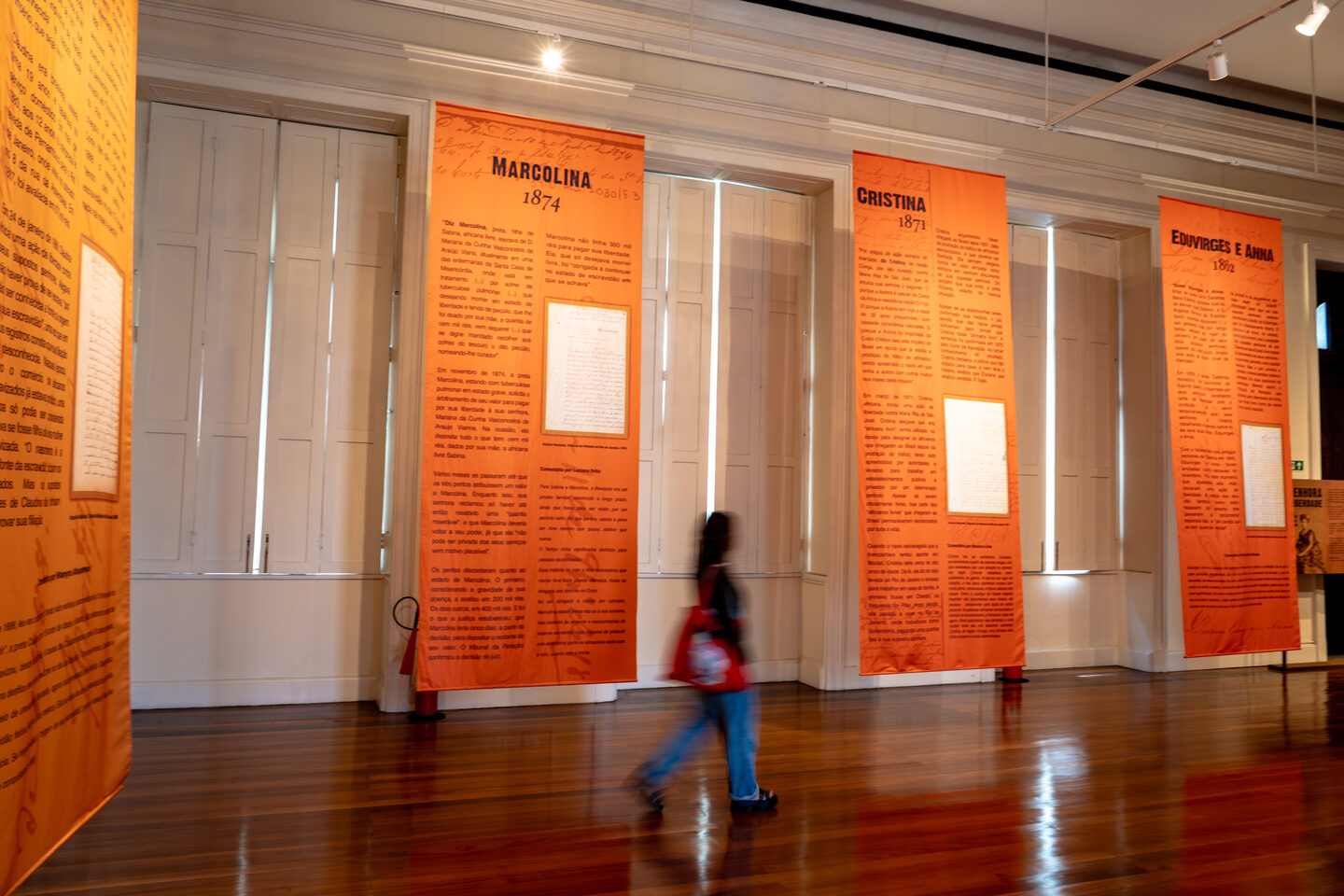
In 1839, Catarina, a mulatto woman living in the province of Espírito Santo, was granted freedom by her master and received a letter of manumission, with the condition that she temporarily continue to serve them. Once freed, she worked and lived independently, having two daughters, Eduvirges and Anna.
Upon the death of Catarina’s former masters in 1843, Eduvirges and Anna were listed as slaves in the estate inventory. At this point, with their mother’s support, they initiated legal proceedings to claim their freedom. The defendants reacted swiftly: as the matter became widely known, they reportedly beat the girls “atrociously” and even threatened to sell them.
Nevertheless, the evidence and arguments presented by the daughters were irrefutable. One of the alleged masters recognized Eduvirges’ right to freedom, and she was immediately emancipated. Anna’s case continued, as the defendants claimed that Catarina had only gained her freedom after her masters’ deaths, and thus Anna had been born a slave. The judge, however, ruled otherwise, granting Anna her freedom. The defendants appealed, and the Court of Appeals upheld the decision, confirming that Anna was free, as she had been born of a free mother.
Read the commentary by Clicea Maria Miranda.
Eduvirges, Anna, and Catarina—three women on the threshold between captivity and freedom. On one side stood the power of the masters, wielding violence and restricting liberty to enforce the weight of slavery and dehumanization. On the other stood the agency of women who, like many others revealed (and yet to be revealed) by history, built diverse networks to secure freedom—freedom that, in its many meanings, encompassed the right to live one’s own life; to be free from abuse; to access the fruits of one’s labor and use them to sustain the family bonds that slavery sought to sever; to live with loved ones; and not only to resist, but to exist truly.
“Eduvirges and Anna, daughters of Catarina Maria Esteves, a freed mulatto woman who had been enslaved by Manoel José Esteves and D. Angelica Ferreira do Espírito Santo, alleged slaves, state (...) that, having long groaned under the harshness of captivity at the hands of their so-called masters, they wish to bring a civil action for freedom before this court.”
1871
1871
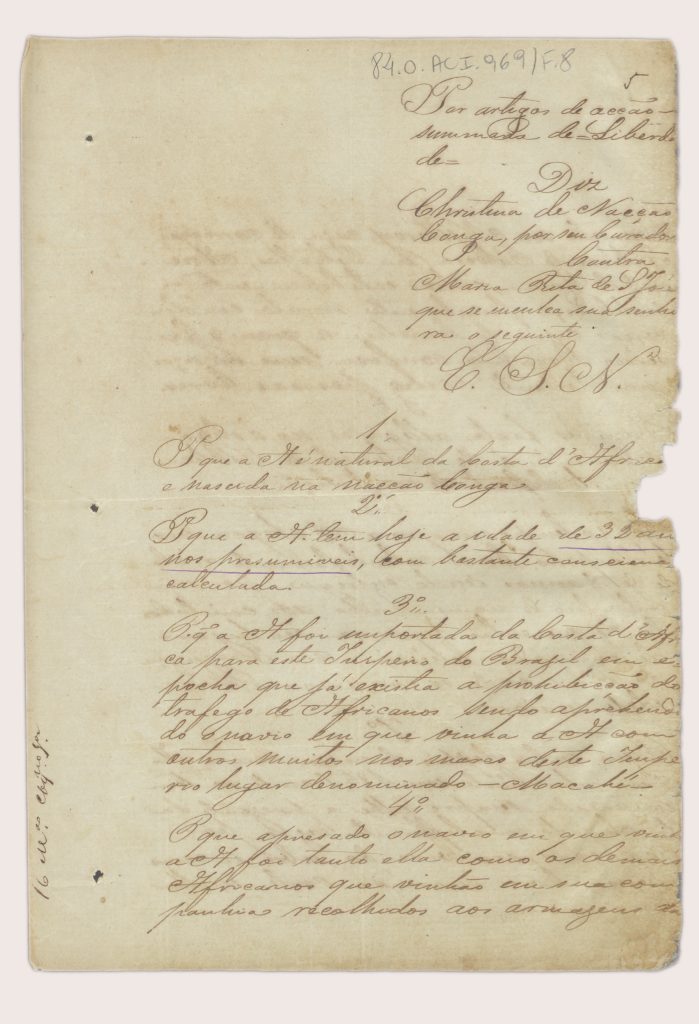
In March 1871, Cristina, an African woman, filed this freedom suit against Maria Rita de São José. She claimed to be a “free African,” a term used at the time for Africans who arrived in Brazil after the ban on the slave trade, in 1831, having been seized by authorities and assigned to work in public and private establishments for a period. Despite being officially free, many of these “free Africans” remained enslaved throughout their lives.
When the slave ship transporting her attempted to dock in Macaé, Cristina was about eight years old. From there, she says she was taken to Rio de Janeiro and sent to work in a family household, first in Cherém, in the parish of Pilar. Years later, she lived in Rio de Janeiro, working as a produce vendor and paying a fixed amount to her supposed mistress.
Cristina argued that she had arrived in Brazil after the trafficking of enslaved Africans was prohibited, and that she should be recognized as free. She also emphasized that she had never been officially recorded as a slave in any document of her supposed mistress, and that her sister, Eliziana, was in the same situation.
Although witnesses corroborated her account, the judge ruled that there was insufficient evidence to establish that Cristina was a “free African.” The Court of Appeals upheld this ruling in 1875. Upon learning the outcome, Cristina told the police that she would not return home, nor would she share the same fate as Eliziana, who was ultimately sold. She then fled.
Read the commentary by Monica Lima.
Cristina did not accept this. She likely learned from friends that the law recognized her captivity as illegal. Cristina worked as a produce vendor, earning her own living. The streets were her workplace, where she encountered many people, engaged in conversation, and gathered information.
When the Brazilian Imperial justice system failed to recognize her rights, she escaped—surely with the help of others. Enslaved and freed Africans maintained connections and formed support networks. Quilombos existed nearby, and a woman like Cristina would find paths to freedom. Cristina, a free African woman from the Conga nation, possessed both courage and unwavering determination.
“By summary proceedings for freedom, Cristina, of the Conga nation, through her guardian, brought a case against Maria Rita de São José, charging her mistress with the following: 1) that the plaintiff was a native of the African coast and born into the Conga nation; 2) that the plaintiff was approximately 32 years old, fully aware of her circumstances; 3) that the plaintiff had been brought from the African coast to the Empire of Brazil at a time when the trafficking of Africans was already prohibited, and that the ship carrying her and many others had been seized in Brazilian waters.”
1872
1872
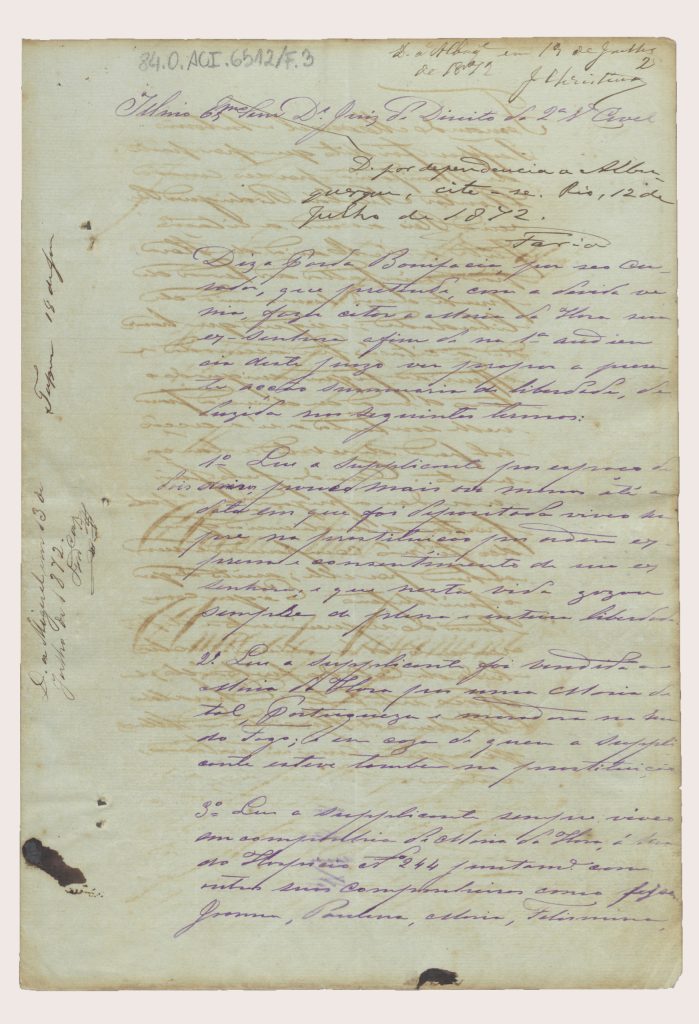
Bonifacia was twenty years old in 1872 when she filed a lawsuit for freedom against Maria da Hora. She stated that her alleged mistress had forced her into prostitution, along with Joana, Paulina, Maria, Felismina, Florisbela, and another woman named Bonifacia.
They were compelled to perform “unseemly and illicit acts” both in their mistress’s residence and in another property she owned, located at the rear of a warehouse.
Bonifacia contended that she had “generated significant profits for her mistress during the time she was in her house, together with her, in prostitution,” and that for this reason she should be granted her freedom, along with her “companions in this dissolute life.” Despite witnesses corroborating that Bonifacia had been forced into prostitution, Maria da Hora denied the claims, asserting that Bonifacia had been employed in domestic service.
The judge did not dispute Bonifacia’s account. Emphasizing that “forced prostitution is not a legal ground for granting freedom,” he ruled that Bonifacia should remain in the possession of Maria da Hora. Several months later, the Court of Appeals upheld this decision. Consequently, Bonifacia remained enslaved and continued to be subjected to forced prostitution.
Read the commentary by Martha Abreu.
Bonifacia, named after the hero of Brazilian independence, fought for her own liberation by seeking a summary action for freedom in court. A year after the enactment of the Lei do Ventre Livre (Law of Free Birth), when such a claim was legally viable, one might ask what motivated this twenty-year-old woman to act. Was it the forced prostitution, increasingly condemned in the press, or a new restriction on the freedom she claimed to enjoy?
In any case, Bonifacia demonstrated a keen ability to articulate the central issue: the two crimes committed against her body constituted a double theft. Although she was ultimately defeated, women like Bonifacia expanded the public and legal discourse on the right to freedom and profoundly challenged the moral legitimacy of the institution of slavery.
“Bonifacia, a mixed-race woman, states through her guardian that she intends to summon Maria da Hora, her former mistress, to initiate a summary action for freedom. She affirms that for a period of two years she lived in prostitution under the express order and with the consent of her former mistress, and that during this time she always exercised complete personal freedom.”
1874
1874
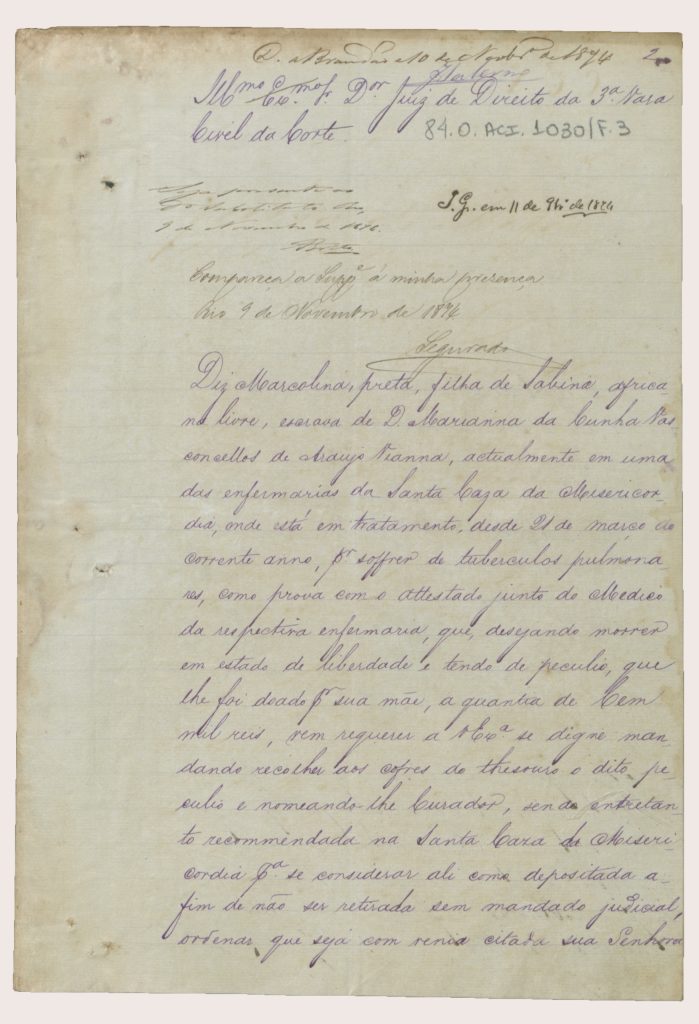
In November 1874, the Black woman Marcolina, suffering from severe pulmonary tuberculosis, requested an appraisal of her value to pay for her freedom to her mistress, Mariana da Cunha Vasconcelos de Araujo Viana.
At the time, she deposited everything she had: 100,000 réis, given to her by her mother, the free African woman Sabina.
Several months passed before the three experts assigned a value to Marcolina. Meanwhile, her mistress complained that she had received only a “meager sum” up to that point, and that Marcolina should return to her service, since she “cannot be deprived of her services without a plausible reason.”
The experts disagreed regarding Marcolina’s condition. The first, considering the severity of her illness, valued her at 200,000 réis. The other two, at 400,000 réis. And this is what the court ruled: that Marcolina would have five days, starting from the decision, to pay the remainder of her value. The Court of Appeals upheld the judge’s decision.
Marcolina did not have 300,000 réis to pay for her freedom. She, who only wished to die a free woman, was “forced to remain in the state of slavery in which she found herself.”
Read the commentary by Luciana Brito.
For Sabina and Marcolina, freedom was a family project, nurtured over time, even if it could only be experienced briefly. It seems that being free, even for a short while, was worth it… better than never.
Time held different meanings for those in bondage. This story of mother and daughter demonstrates that dying free made a profound difference, whether in reaching heaven or Orum.
By being forced to die in captivity, Marcolina was bound not only to her mistress, but also to the shackles and pettiness of the slave system—a machine that produced and destroyed lives, feeding on both life and death alike.
“Marcolina, a Black woman, daughter of Sabina, a free African woman and former slave of D. Mariana da Cunha Vasconcelos de Araújo Viana, currently in one of the wards of the Santa Casa de Misericórdia, where she is undergoing treatment (...) for suffering from pulmonary tuberculosis, (...) that wishing to die a free woman and having savings, which were given to her by her mother, in the amount of one hundred thousand réis, she hereby requests (...) that you deign to order the said savings to be deposited in the treasury, appointing her as guardian.”
1875
1875
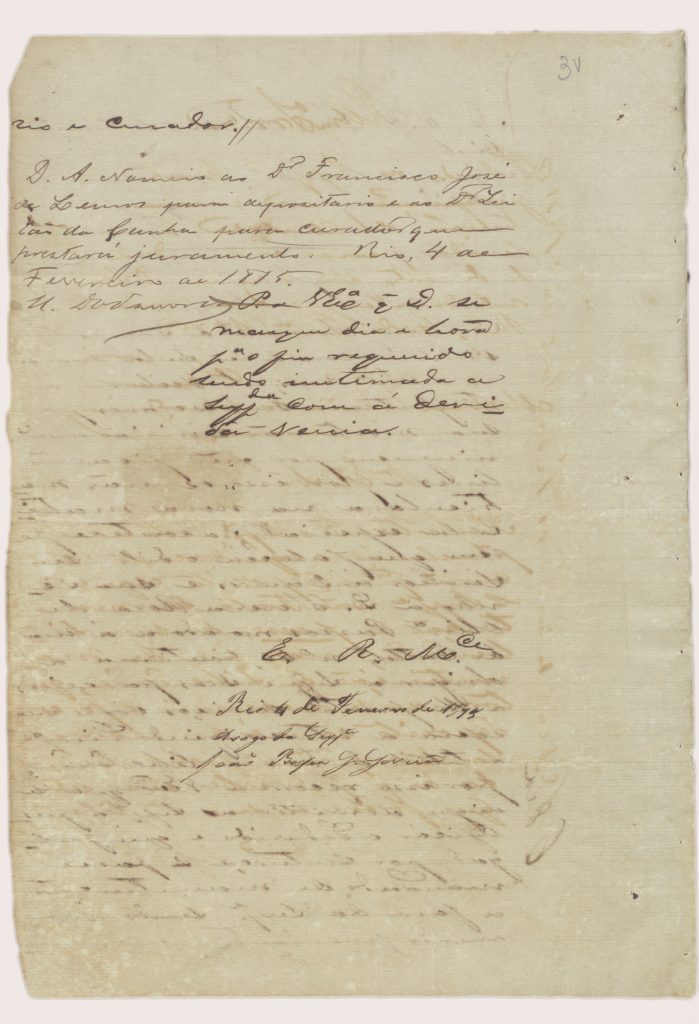
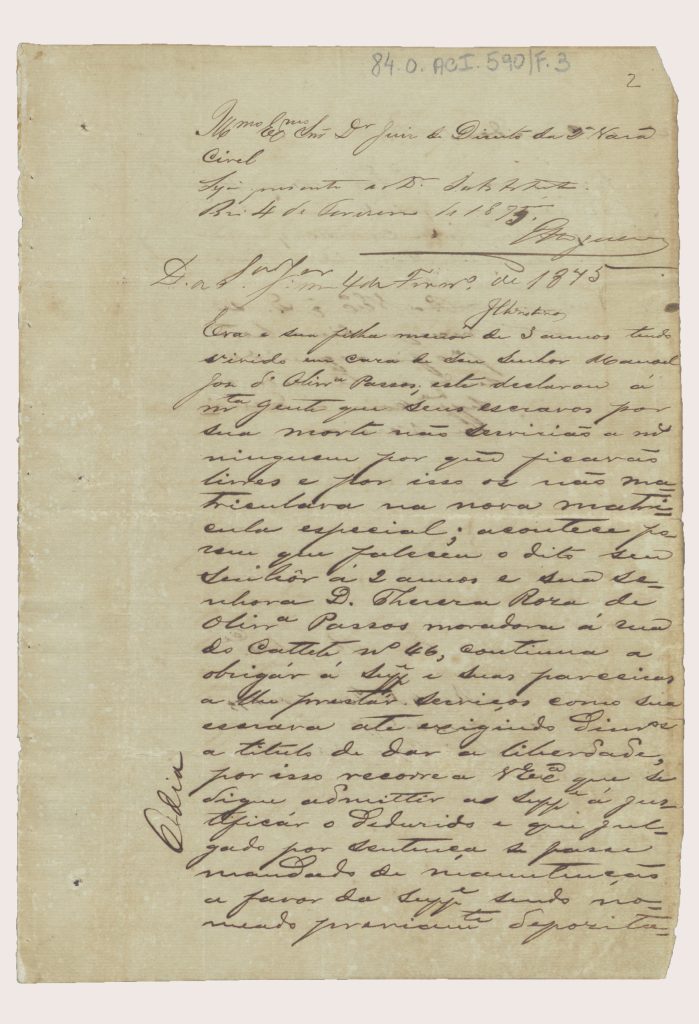
The “preta crioula (black Brazilian)” Eva was twenty-five years old when she initiated a legal action for freedom against Tereza Roza de Oliveira Passos, widow of her former master, Manoel José d’Oliveira Passos. According to Eva, Manoel had publicly declared that his slaves would be freed upon his death. However, when he died intestate, his widow refused to deliver the letters of manumission to Eva and her three-year-old daughter, Maria.
Eva had been purchased by Manoel in 1865, along with her mother, Isabel, from Angola, who was thirty-eight years old at the time. Both were known for their skills in washing, ironing, and cooking. As was common in that period, Eva was leased to other households, with her alleged mistress collecting the rental fees.
In 1875, the judge in the case ruled that Eva and Maria were entitled to their freedom .
Tereza contested the decision, appealing to the Court of Appeals. However, on May 12, 1876, she sent her nephew to the court to withdraw the appeal, stating that she “recognized the rights to freedom of the aforementioned Black women.”
Read the commentary by Lucia Helena Oliveira Silva.
Among the various arrangements between enslaved workers and their masters, there exists a multitude of relationships that defy more orthodox interpretations. Eva was a skilled enslaved woman whose labor brought her master frequent profits, due to the nature and demand of her work in a society where captives served as its hands and feet. It is possible that the income generated by her labor prompted her master to promise her freedom—a promise that was never fulfilled.
Balancing the fulfillment of her husband’s word with financial necessity, the widow-maintained Eva and her daughter Maria in bondage. Confident in her rights, even if they were not yet formally recognized, Eva turned to the courts to claim the freedom that had been promised. Months after the dispute, Tereza, the widow, acknowledged Eva and her daughter’s right to liberty—perhaps motivated by a sense of justice and respect for her late husband’s wishes, or possibly haunted by his spirit, tormented by the souls of those unjustly imprisoned. What matters is that Eva and Maria ultimately achieved their freedom.
“Eva and her youngest daughter, under the age of three, having lived in the house of their master, Manoel José d’Oliveira Passos, who had declared to many that his slaves would serve no one else after his death because they were free (...). Yet it so happened that their master passed away two years ago, and his wife, D. Tereza Roza de Oliveira Passos, residing at Rua do Catete 46, continues to compel the petitioner and her companions to serve her as slaves, even demanding tithes in exchange for their freedom. For this reason, she has appealed to Your Excellency (...) to issue a warrant ensuring the maintenance of her freedom.”
Rio de Janeiro, February 4, 1875.
1883
1883
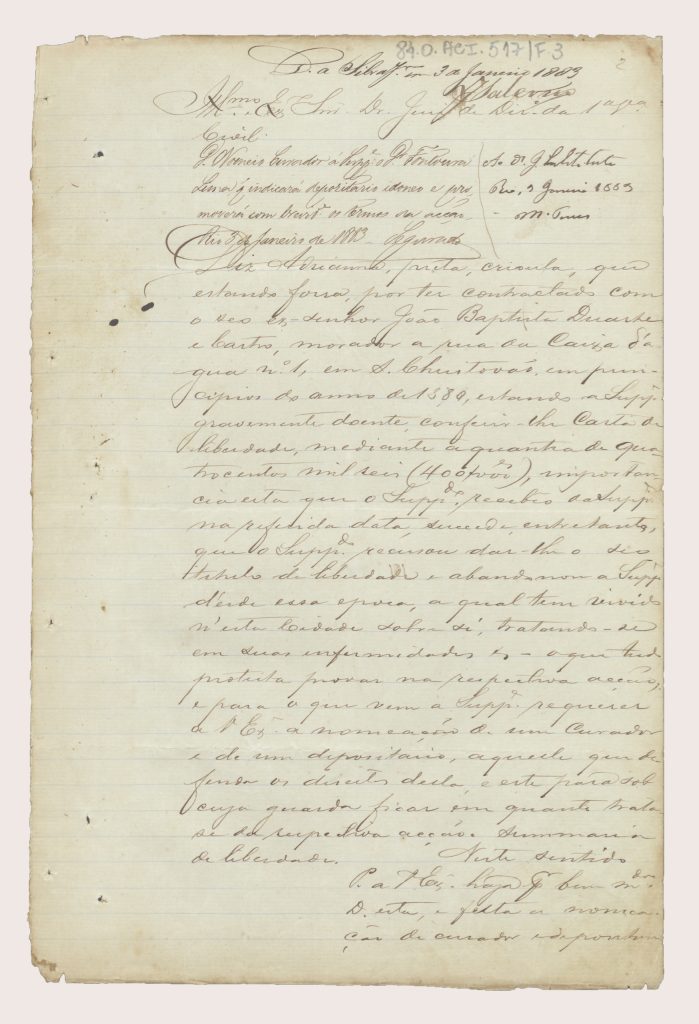
Adriana, a farm worker, was approximately 38 years old when she filed a legal action for freedom against her alleged master, João Batista Duarte e Castro.
She claimed to have been abandoned in April 1880, prohibited by João Batista from entering his house, even to visit her two young children, one of whom was João Batista’s grandson. At that time, having paid 400,000 réis for her freedom, Adriana received a receipt along with the promise that her letter of liberty would be delivered the following day at the notary’s office.
As Adriana was ill at the time and had to “seek shelter for treatment,” she was unable to retrieve her letter of freedom. Upon recovering, she discovered that João Batista had not fulfilled his promise. Moreover, according to her testimony, when she asked someone else to collect the letter, he took the receipt and never returned it. In May 1882, she was confronted by an individual named Gomes, who claimed to be João Batista’s attorney and demanded an additional 300,000 réis in exchange for delivering her letter of manumission. Adriana refused and continued her efforts to obtain the document to which she was entitled. She then reported João Batista’s attorney, and instead of receiving her letter of freedom, was imprisoned in the city’s Detention House.
At the detention center, Adriana was assigned a guardian, who petitioned for her release “for the simple fact of having had the audacity to plead for her freedom.” He succeeded, and she was released in January 1883. The case then proceeded, with witnesses examined and arguments presented by both parties.
João Batista claimed that Adriana had never been abandoned and that she had been seduced into fleeing. The judge ruled that Adriana’s allegations were insufficient to grant her freedom, deciding that she should be returned to João Batista and that she retained the right, if she wished, to file another suit to seek arbitration of her value. Adriana appealed the ruling, but to no avail: on October 16, 1883, the Court of Appeals upheld the decision, and Adriana remained enslaved.
Read the commentary by Hebe Mattos.
This case addresses the legal conflicts between masters and enslaved individuals over the arbitration of the price of slaves, a central issue in the early phase of the abolitionist struggle, which was regulated in 1885 in a manner decidedly favorable to masters under the so-called Law of the Sexagenarians, shortly after the conclusion of Adriana’s lawsuit.
What strikes me most, however, is the remarkable courage that led Adriana to denounce the attorney, who had no qualms about demanding additional payment for her freedom, juxtaposed with her vulnerability, expressed in the arbitrariness of her imprisonment and the continuation of her enslavement in the final judgment.
Even more striking is the cruel and hierarchical intimacy revealed in the forced kinship between Adriana and her oppressor, as mother and grandfather of the same free child. Adriana’s courage, together with her guardian’s remark that she was imprisoned solely for her “boldness in pleading for her release,” illuminates the context of the abolitionist struggle, while also laying bare the structurally violent and far-reaching machinery of slaveholding society.
“Adriana, a Black Brazilian woman, states that having been freed by her former master, João Batista Duarte e Castro, resident at Rua da Caixa d’Água number 1, in São Cristóvão, in early 1880, while she was seriously ill, he granted her a letter of freedom in exchange for 400,000 réis, which the defendant received from her on the stated date. However, the defendant subsequently refused to deliver her formal title of freedom and abandoned her, leaving the petitioner to live independently in the city while managing her illnesses—all of which she seeks to substantiate in the pending lawsuit.”
1888
1888
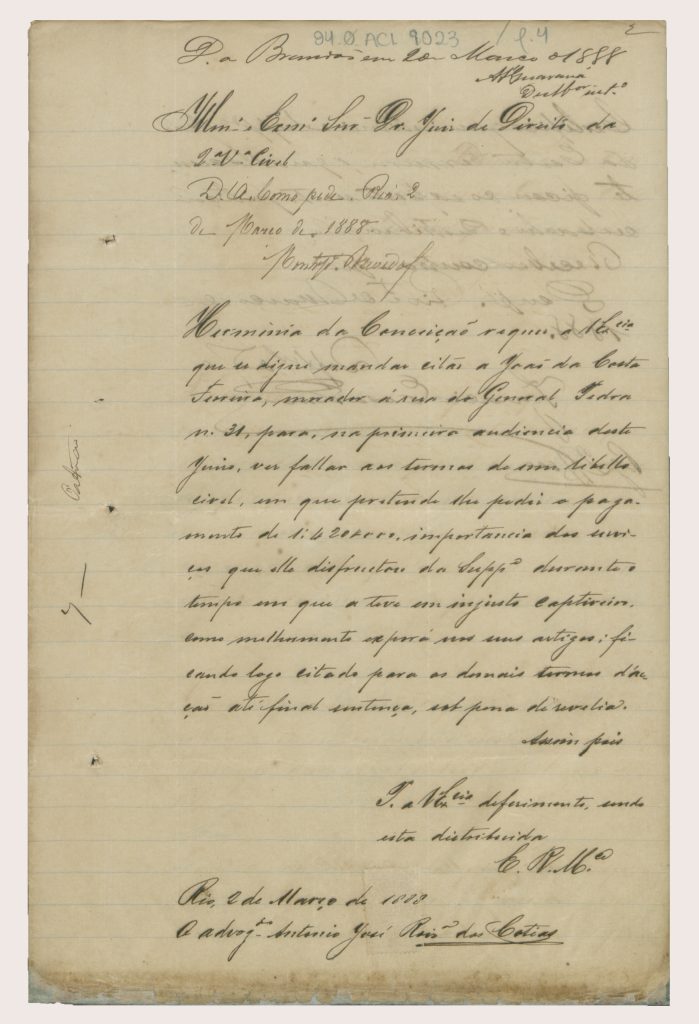
Hermínia was in her early twenties when she filed a lawsuit against João da Costa Ferreira, seeking wages for the period during which he had rented her out to others for domestic labor. According to her testimony in the case, she was born free but had been enslaved as a child, kidnapped in Maranhão, and brought to Rio de Janeiro to be sold.
Purchased by the Portuguese trader Ferreira, Hermínia was held in illegal captivity from 1880 to 1886, when she fled with her young daughter and secured assistance to draft a petition initiating a lawsuit for her freedom.
Workers sympathetic to the abolitionist cause likely assisted her in escaping, finding shelter, and initiating the legal proceedings. After obtaining a favorable ruling for her freedom in 1886, she reopened the case two years later to seek compensation for the labor she had performed while being rented out, during which Ferreira received the full wages paid by her employers.
Several workers, including Portuguese laborers, testified on Hermínia’s behalf. The merchant, however, claimed that he had purchased her “in good faith,” a defense widely invoked by slaveholders at the time. The trial judge ruled that, despite her having obtained freedom in a prior lawsuit, Hermínia and her attorney had not provided sufficient evidence that she had been born free. The case was only concluded after the abolition of slavery in 1890, when judges of the Court of Appeals of Rio de Janeiro denied Hermínia the right to compensation for her labor.
Read the commentary by Fabiane Popinigis.
Hermínia’s story illuminates the experiences of people of African descent and Indigenous individuals who were kidnapped and taken from their families. Discovering this document was profoundly moving, as it allowed me to comprehend the scope of her struggle and understand how she mobilized networks of solidarity to find shelter when she fled with her young daughter, lawyers to defend her, and workers to testify on her behalf.
Hermínia’s case also provides insight into the intersection of women’s struggles with popular and radical abolitionism, which expanded the demands for freedom to include claims for citizenship and rights. Recognizing the illegality and injustice of slavery, these women, together with lawyers and abolitionists, articulated claims in the press and in the courts that resonate with contemporary notions of reparation, such as seeking wage compensation for years of unpaid labor.
“Hermínia da Conceição petitions Your Excellency to summon João da Costa Ferreira, resident at Rua do General Pedra no. 31, to appear at the first hearing of this court to respond to a civil complaint, in which she seeks payment of 1,420,000 réis—corresponding to the value of the services he derived from the petitioner during the period in which he held her in unjust captivity, as she will further detail in her statements. He is hereby summoned to appear for all subsequent proceedings until final judgment, under penalty of default.
Rio de Janeiro, March 2, 1888.”
1888
1888
Claudina was Brazilian, single, nineteen years old, and employed in domestic service. In May 1880, at the age of twelve, she was purchased and transported from Pernambuco to Rio de Janeiro, where she lived in the townhouse at 8 Rua da Assembleia. By 1887, her monetary valuation was recorded at 675,000 réis.
On January 24, 1888, Claudina filed a lawsuit against her alleged masters seeking her freedom. She argued that there was no evidence to establish her status as a slave, “since the source or origin of her slavery was unknown,” as her records indicated her parentage was unknown.
At that time, with the transatlantic trade in enslaved Africans already prohibited, an individual could only be legally recognized as a slave if born to an enslaved mother. “Birth is the only source of slavery,” the lawyers stated, yet Claudina’s alleged masters were unable to provide proof of her parentage.
The judge ruled that, in the absence of legal proof of her birth, Claudina was entitled to her freedom. In March 1888, her alleged masters, unwilling to accept the ruling, appealed the decision, and the case was brought before the Court of Appeals of Rio de Janeiro. However, it was never heard by the Court. On June 5, 1888, the rapporteur noted: “Since slavery was abolished on May 13, there is nothing further to decide.”
Read the commentary by Wlamyra Albuquerque.
In June 1888, the court announced, “Since slavery was abolished on May 13, there is nothing more to decide,” and Claudina, a nineteen-year-old Black woman, was officially freed. The efforts of those who had enslaved her since she was twelve proved futile.
Claudina’s cause had prevailed; her masters’ appeals were null and void. On the day of Abolition, she walked unhurriedly through the Court, her triumph a quiet yet powerful statement. She had secured her freedom through a legal action, now ratified by the nationwide abolition of slavery. Claudina emerged into the festive crowd as a living symbol of liberation. Drawing on the pain of her childhood separation from her family, she claimed the freedom that had been denied her. If the “origin of her slavery” was unknown, why should she have remained in bondage? In 1888, Claudina embodied the very freedom she had fought to achieve.
“Claudina, a 19-year-old Black woman, allegedly a slave of Manoel José da Rosa (...) states that, as the petitioner is of mixed race and, as such, Brazilian, and being registered with the notation ‘unknown parentage,’ she requests and asks (...) by virtue of the law of September 28, 1871, which considers individuals of ‘unknown parentage’ and born in this Empire to be free.”
Brazilian slave society produced a vast body of documents that sheds light on the experiences of women held in captivity. The following section reveals the complexity of the conditions they endured, as well as the multiple forms of resistance that shaped their lives.
Freedom permits for enslaved women fill the notarial records of Rio de Janeiro. What shocks us today was routine in the notary offices, whether it was the freedom permit “for the enslaved woman Laudicena, a thirty-year-old unmarried Black Creole” or the freedom permit issued in favor of “the Black woman Rita Maria da Conceição.”
While the judiciary was an arena of resistance for many, on the other hand, its written records served to perpetuate the regime through the characterization of those women in the words of “masters” and officials. Full freedom was difficult, unstable, and dependent on the justice system and politics, as shown by documents regarding the process to ban the Atlantic trade in enslaved Africans, such as the ones about the brigs Asseiceira and Camargo. Associated with their origins and marks they bore on their bodies, many African women were “emancipated” on printed, standardized forms and classified under the “free Africans” file at the National Archives. These documents reveal the very practice of archival organization, which established, within the Empire’s administrative offices, the logic necessary for the slave-based order.
Claudia Beatriz Heynemann
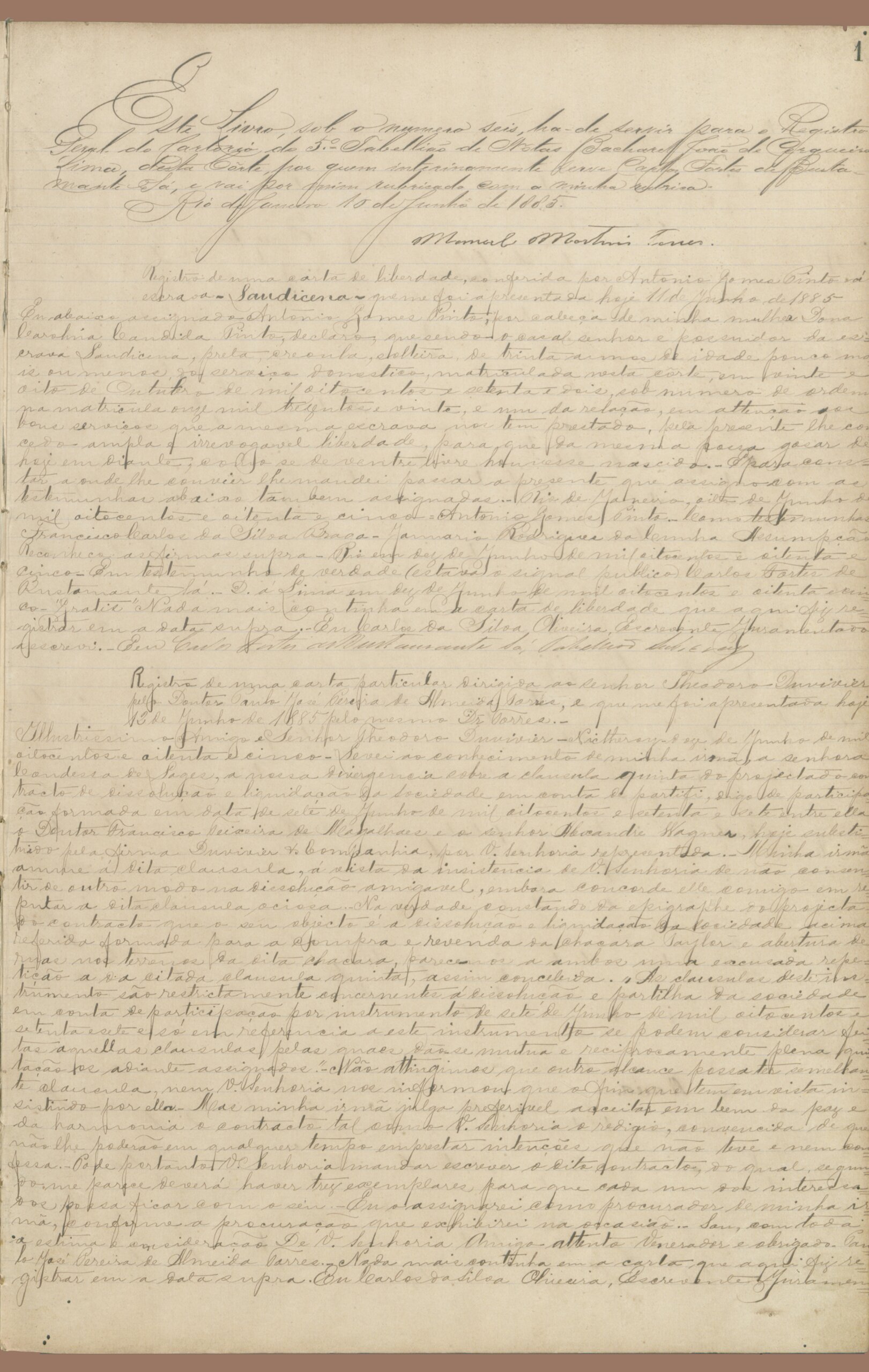
June 11, 1885
Manumission letter for Laudicena issued by Antonio Gomes Pinto.
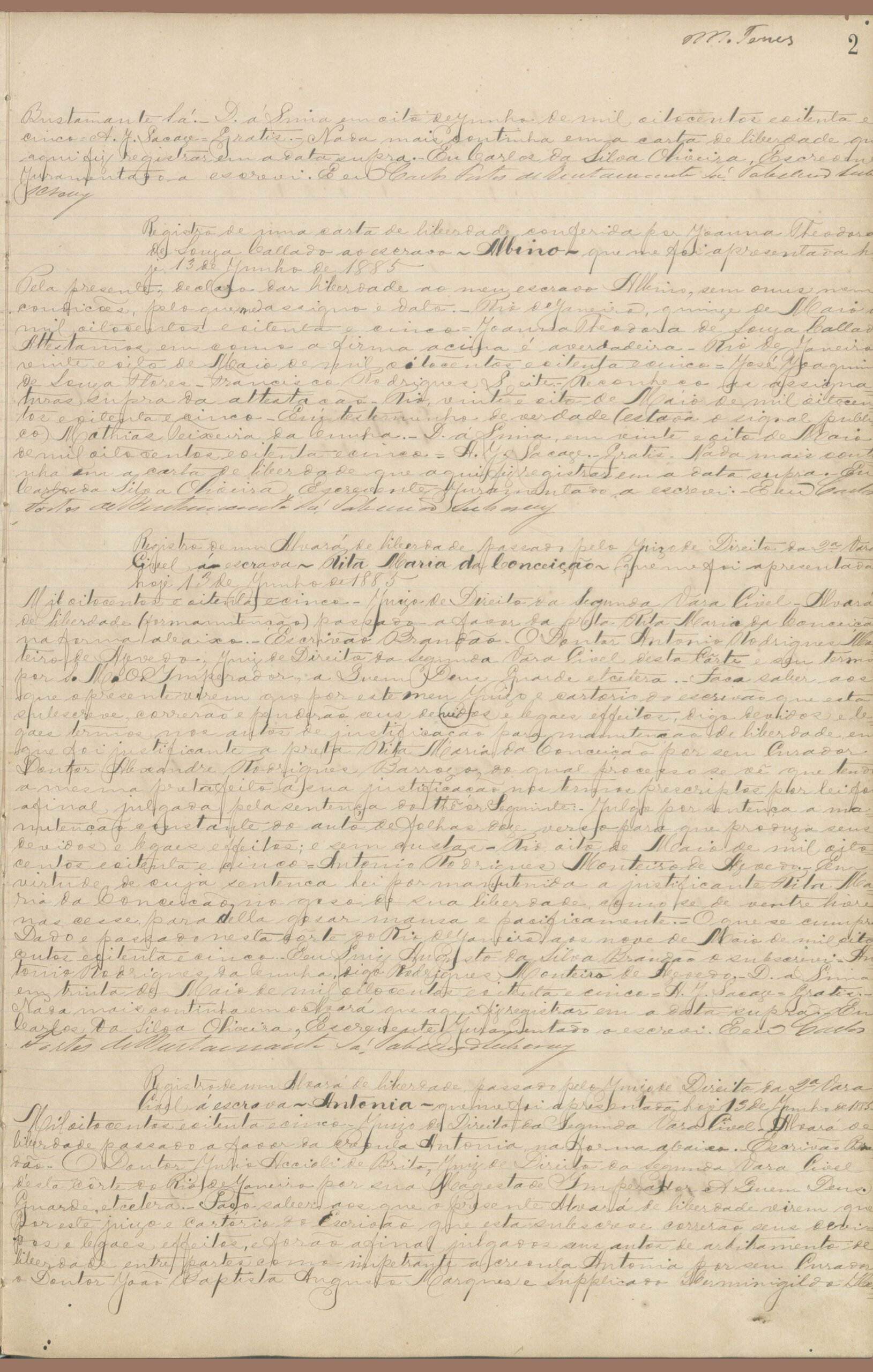
June 13, 1885
Record of the Freedom permit issued to Rita Maria da Conceição. Record of the Freedom permit issued to Antonia.
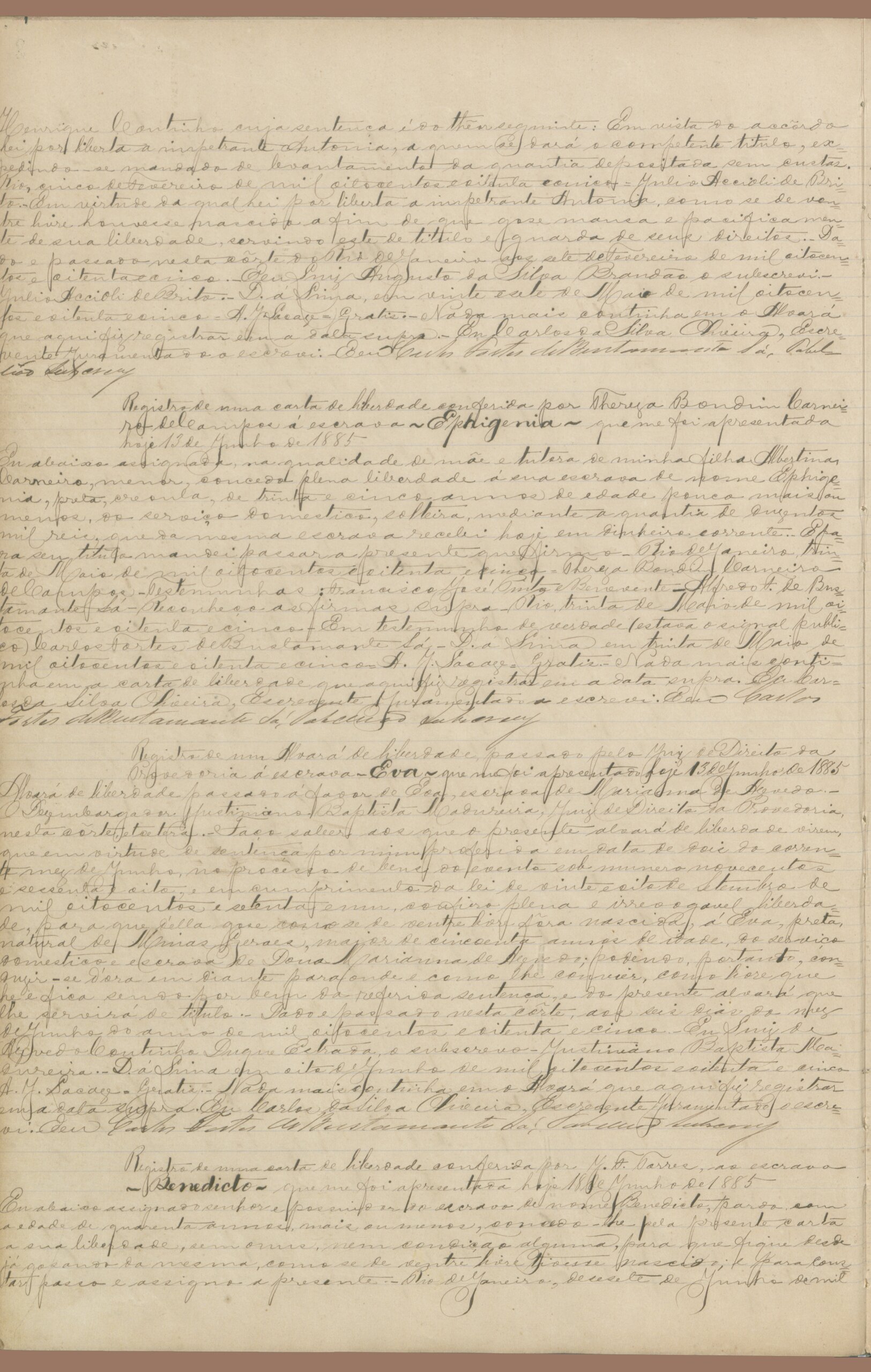
June 13, 1885
Record of a manumission letter granted to Efigênia, for the sum of 200,000 réis, paid by her. Record of a Manumission permit granted to Eva, in compliance with the law of September 28, 1871.
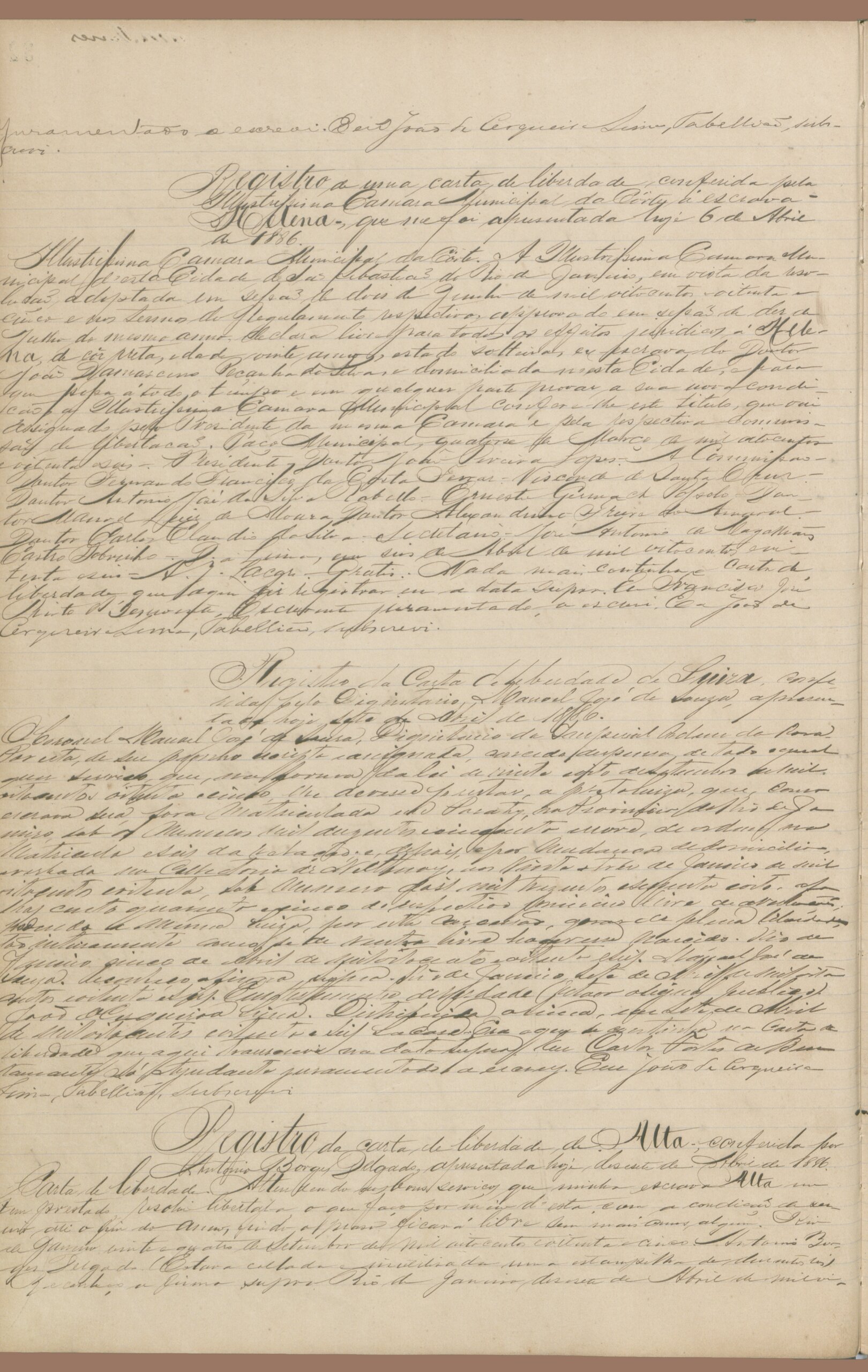
April 6 and 7, 1886
Record of a manumission letter granted to Helena. Record of a manumission letter granted to Luiza, exempting her from “any and all services” she was required to perform under the law of September 28, 1871. Record of a manumission letter granted to Alta “for good services rendered.”
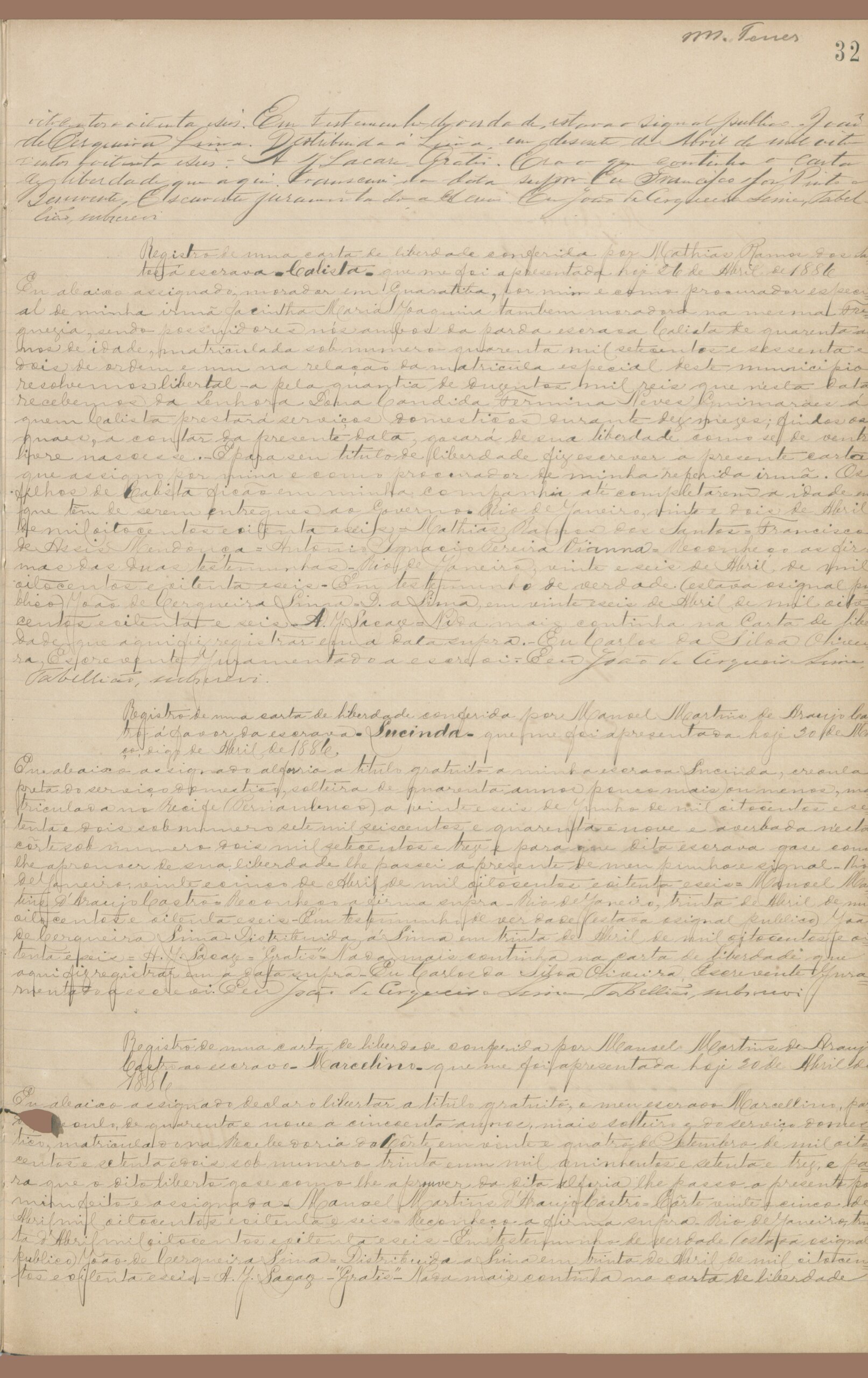
April 26 and 30, 1866
Record of a manumission letter granted to Calista for two hundred thousand réis, paid by Cândida Fermina Neves Guimarães, to whom Calista would provide domestic service for ten months. Record of a manumission letter granted to Lucinda, free of charge.
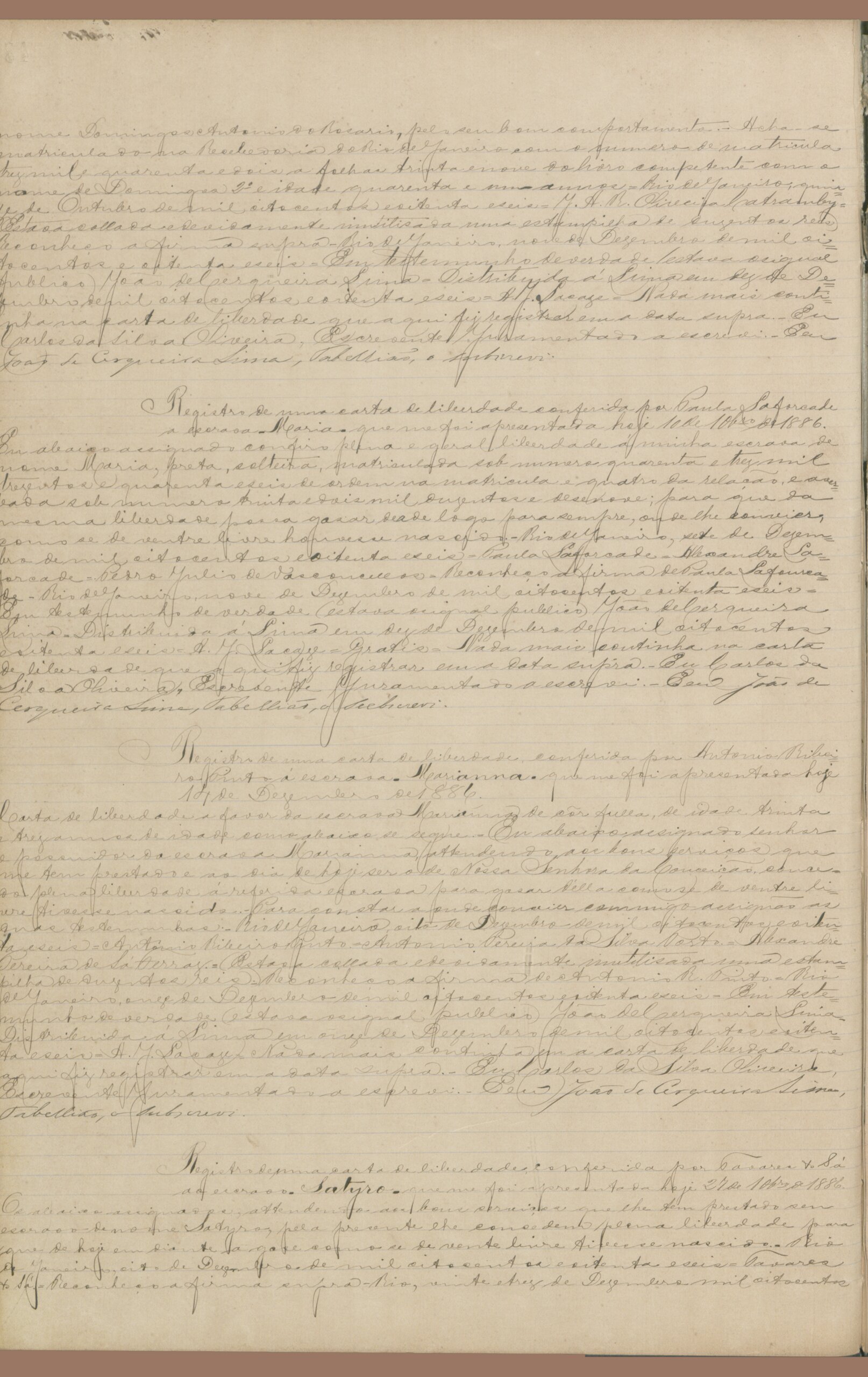
October 10 and 14, 1886
Record of a manumission letter granted to Maria, “as if she had been born free.” Record of a manumission letter granted to Mariana “for good services rendered.”
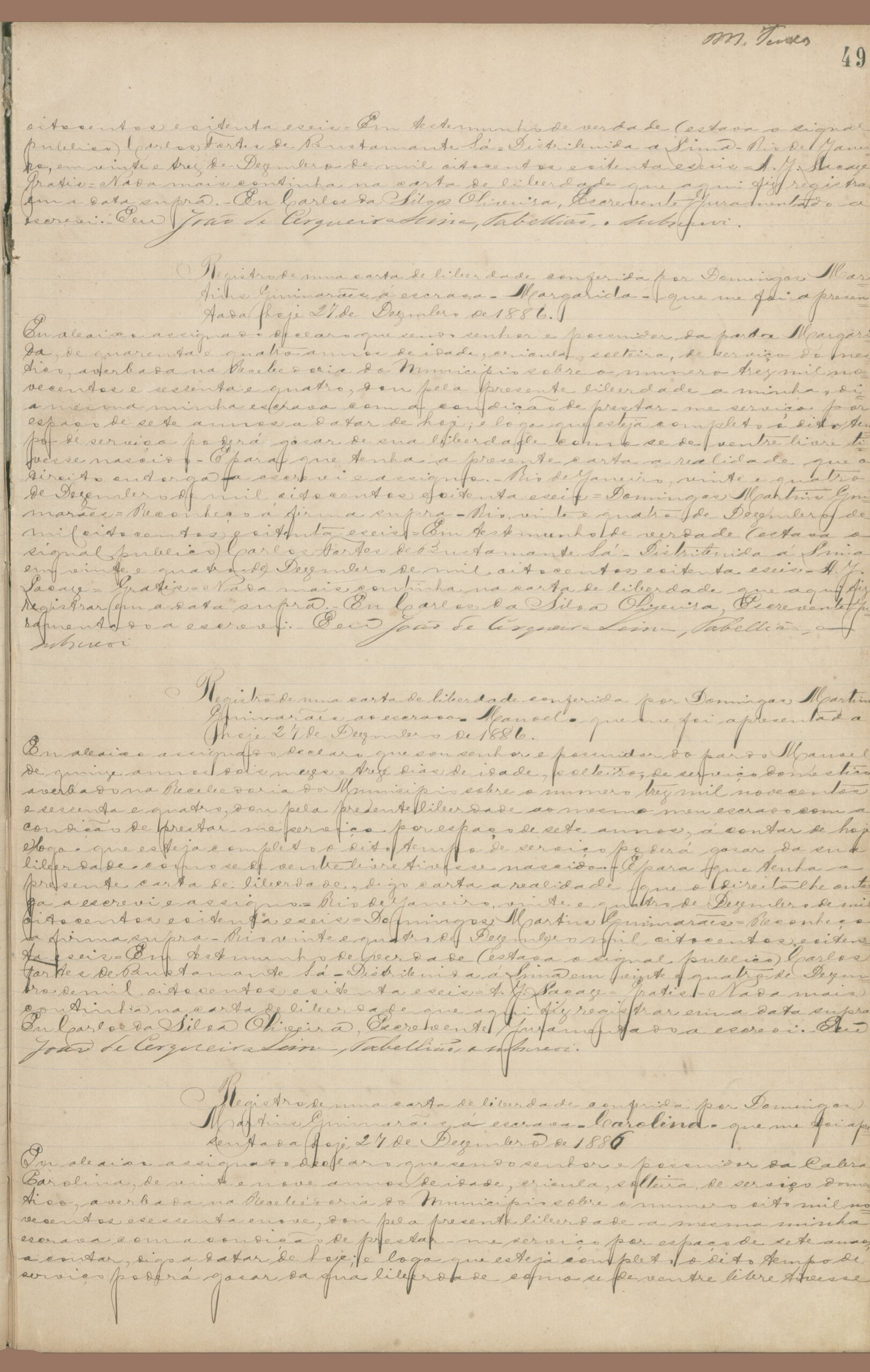
December 24 and 27, 1886
Record of a manumission letter granted to Margarida “on the condition that she provide services” for seven years. Record of a manumission letter granted to Carolina, both “on the condition that they provide services” for seven years.
African and Afro-descendant women have a visible presence in portrait photography, particularly in the carte-de-visite, a popular format in nineteenth-century studios. These photographs often catered to foreign curiosity, so-called scientific interests, and the collecting practices of the ruling classes; at times, they also served to facilitate freedom. In the Brazilian National Archives, the relatively small number of surviving nineteenth-century portraits of Black women holds particular significance for the history of photography and renders these women and their images all the more meaningful in their poetic singularity.
Claudia Beatriz Heynemann
The portrait of Glicéria da Conceição Ferreira, a freed woman, reveals a strong sense of autonomy in the construction of her self-image—one that aligns with the status she intended to assert.
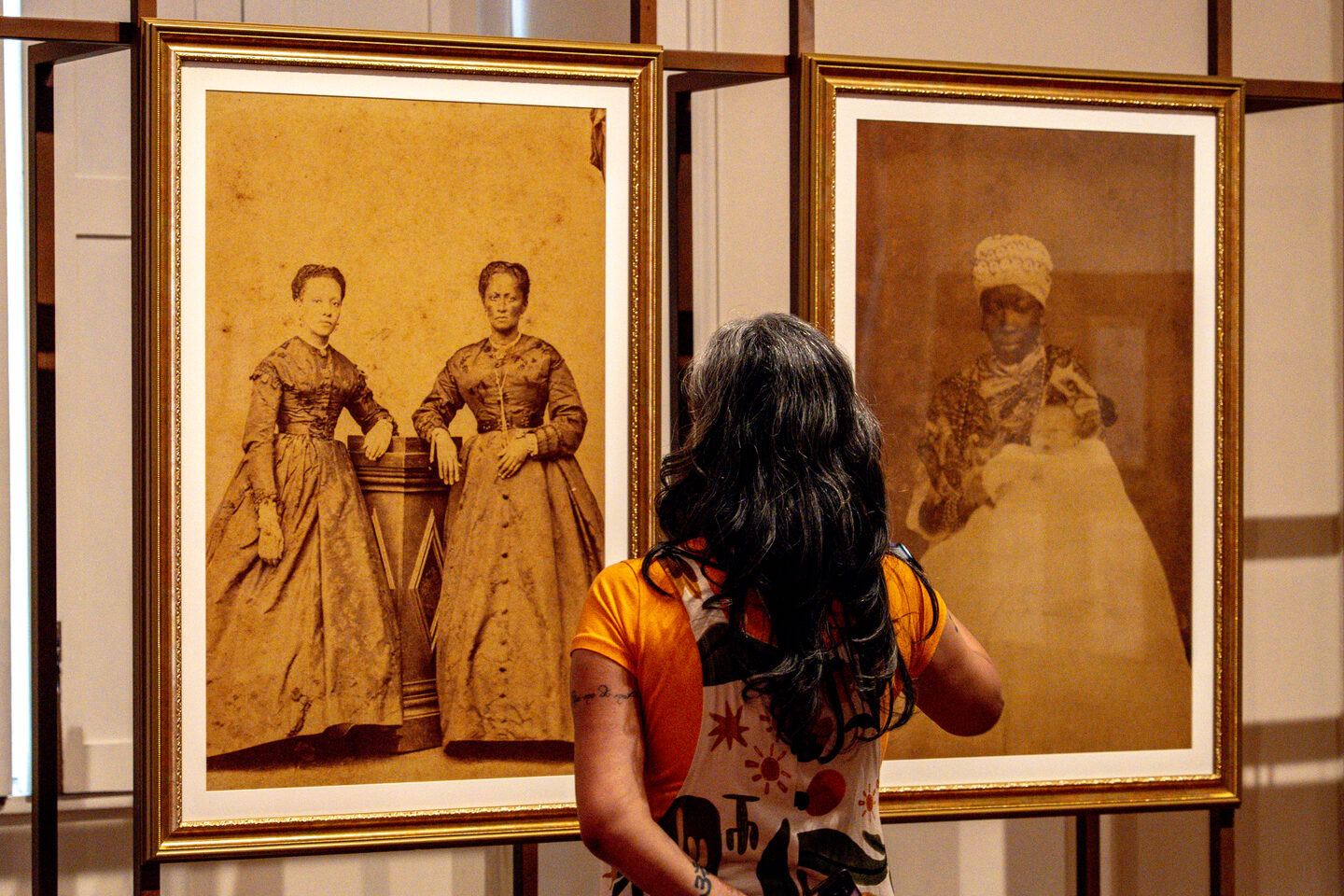
The scene conveys a sense of intimacy and affection. Benvinda, the enslaved wet nurse, holds a child in her arms. Her tense posture and gaze fixed on the baby reveal that the proper focus of the photograph is the white infant—not the Black woman who sustains her.
These photographs invite a slow and curious gaze. Who took this picture? Who are these women? We know little—almost nothing—about this photographic record. Yet its mise-en-scène compels us to reflect on the society that produced it.
The life path of Romana da Conceição spans the Black diaspora between Brazil and Nigeria.
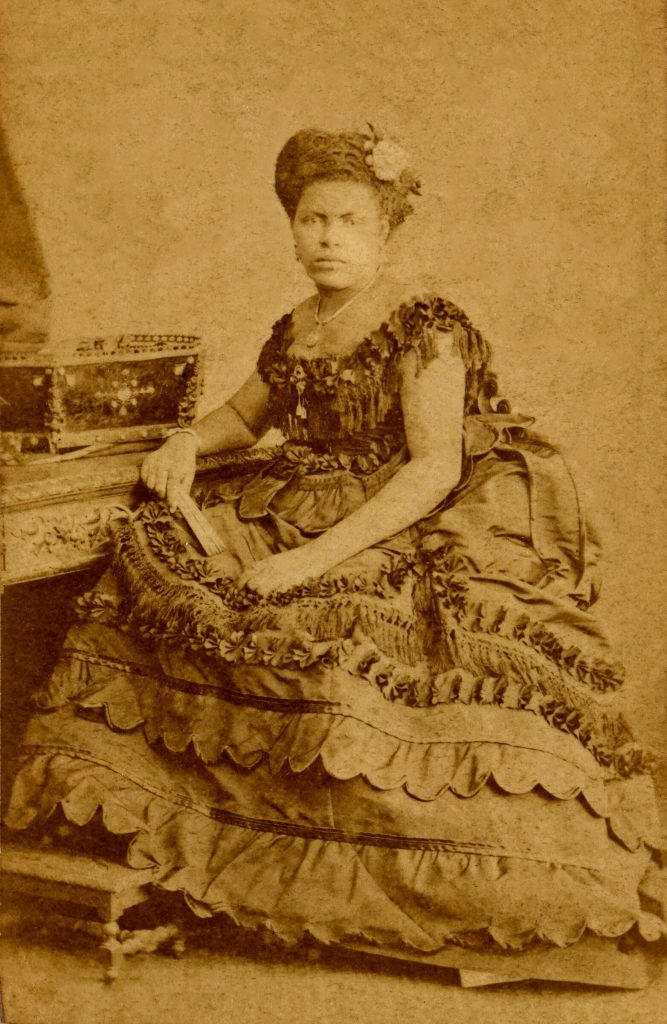
The portrait of Glicéria da Conceição Ferreira, a freed woman, reveals a strong sense of autonomy in the construction of her self-image—one that aligns with the status she intended to assert.
In this, the deliberate choice of clothing and decorative elements plays a crucial role: the refined European-style dress in dark tones, adorned with ruffles, fringes, volume, and floral appliqués; the fan held in one hand; the delicate jewelry and the flower in her hair—all evoking the atmosphere of a special occasion, perhaps a celebration. The setting, reminiscent of a bedroom's intimacy, features objects such as a jewelry box and a footstool, further distinguishing Glicéria from the enslaved Black women often portrayed as “types” or depicted in scenes of labor. Every detail of this composition reminds us that the image stands as both a record and a testament—proof that resistance and perseverance were indeed worthwhile.
Maria do Carmo T. Rainho
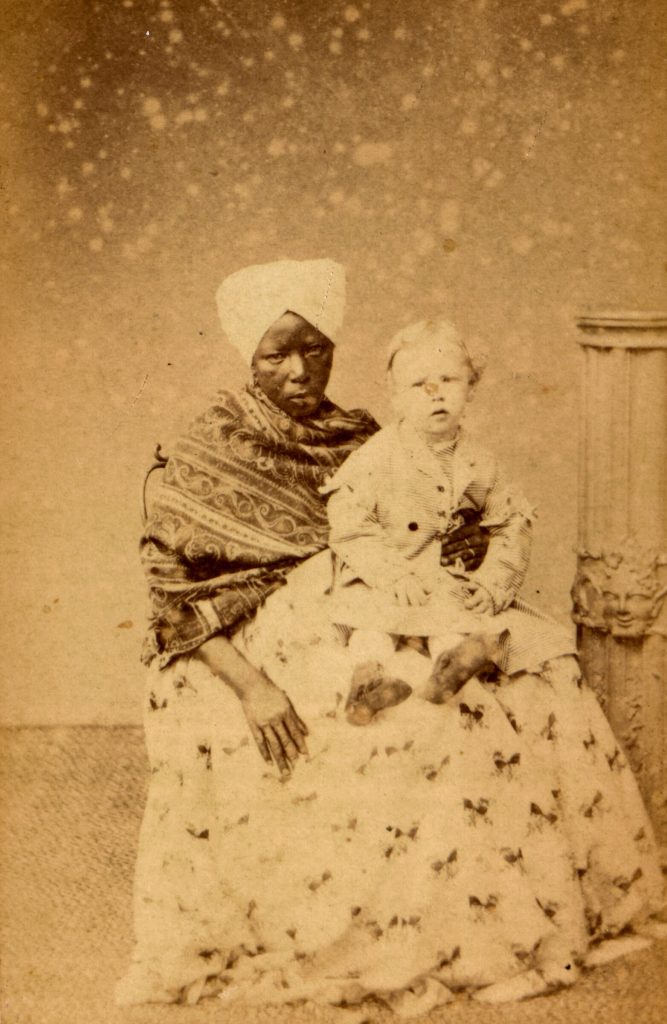
The scene conveys a sense of intimacy and affection. Benvinda, the enslaved wet nurse, holds a child in her arms. Her tense posture and gaze fixed on the baby reveal that the proper focus of the photograph is the white infant—not the Black woman who sustains her.
This visual composition exposes a latent tension: where was Benvinda’s own child? Had the baby died at birth, or was it taken from her so she could nurse another’s child?
Every photograph of a wet nurse bears traces of violence—the forced separation between mother and child, the exploitation of the Black woman’s body, and the denial of her right to motherhood. Though seemingly designed to evoke tenderness, the image also powerfully reveals the racist structures that sustained Brazilian slave society.
Mariana Muaze
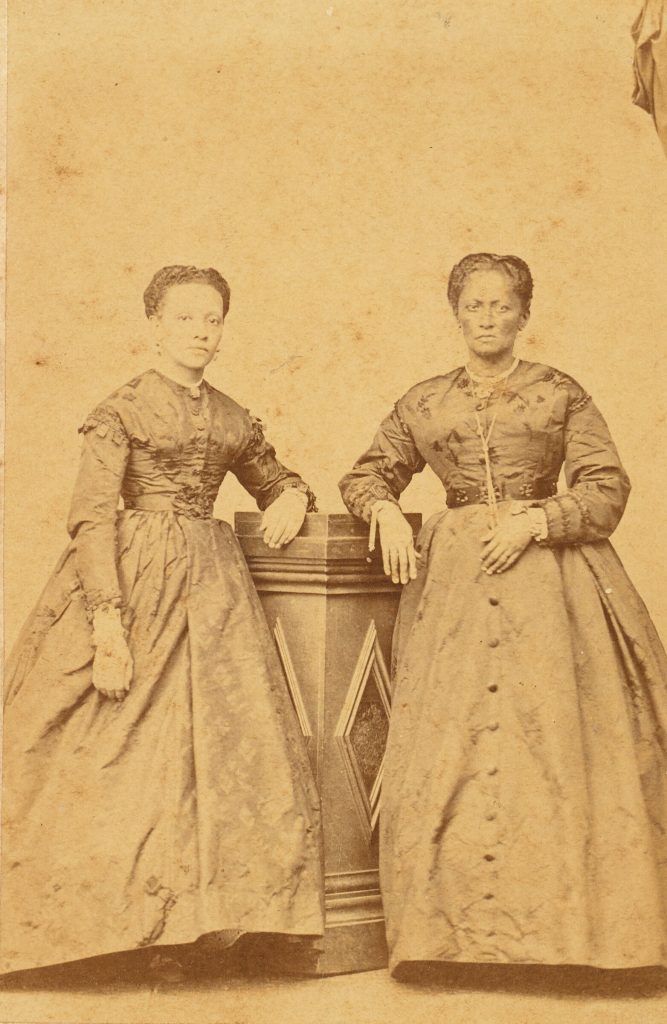
These photographs invite a slow and curious gaze. Who took this picture? Who are these women? We know little—almost nothing—about this photographic record. Yet its mise-en-scène compels us to reflect on the society that produced it.
The two Black women portrayed here presented themselves in dark taffeta dresses, with sober hairstyles and elegant adornments—cameos, necklaces, earrings, bracelets, and shoes—making a deliberate point of displaying these attributes. Such accessories were typically worn by women of the upper class to assert their respectability and belonging to the world of the free.
In a slaveholding society that sought daily to demean Black women, this posture was far from naïve. It expressed, at once, conformity with the dominant conventions of gender, race, and class—and an act of resistance that blurred the racial and social boundaries imposed upon them.
Mariana Muaze
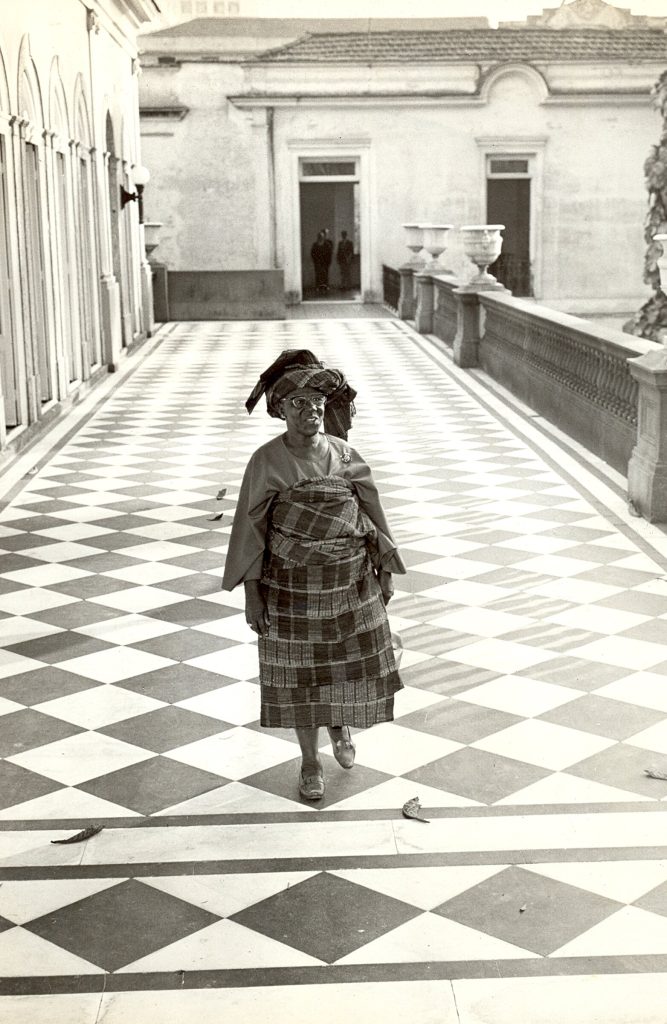
Romana da Conceição, in 1963, at the age of 73, on an official visit to Brazil.
April 1899: aboard the ship Aliança, sixty Africans departed from Salvador on a long journey back to Lagos, Nigeria. This last voyage of freed people and Afro-descendants at the close of the nineteenth century also included several children—among them, Romana da Conceição.
Born in Pernambuco, Romana mentioned, in a 1948 interview with anthropologist Pierre Verger, her longing for Brazil—its food, its festivals—and her desire to return to it.
In 1963, after meeting the Brazilian ambassador Antonio Olinto at the age of seventy-three, she did return, on an official visit. President João Goulart welcomed her, visited the Brotherhood of Our Lady of the Rosary and Saint Benedict of Black Men in Rio de Janeiro, and traveled through Salvador and Recife.
Despite the celebrations surrounding her visit, Romana’s journey did not spark broader reflection on the Black diaspora in the post-abolition period. Yet it inspired the diplomat and writer Antonio Olinto to write the essay “Os brasileiros na África” (Brazilians in Africa) and the novel “A casa da água” (The House of Water).
Maria do Carmo T. Rainho
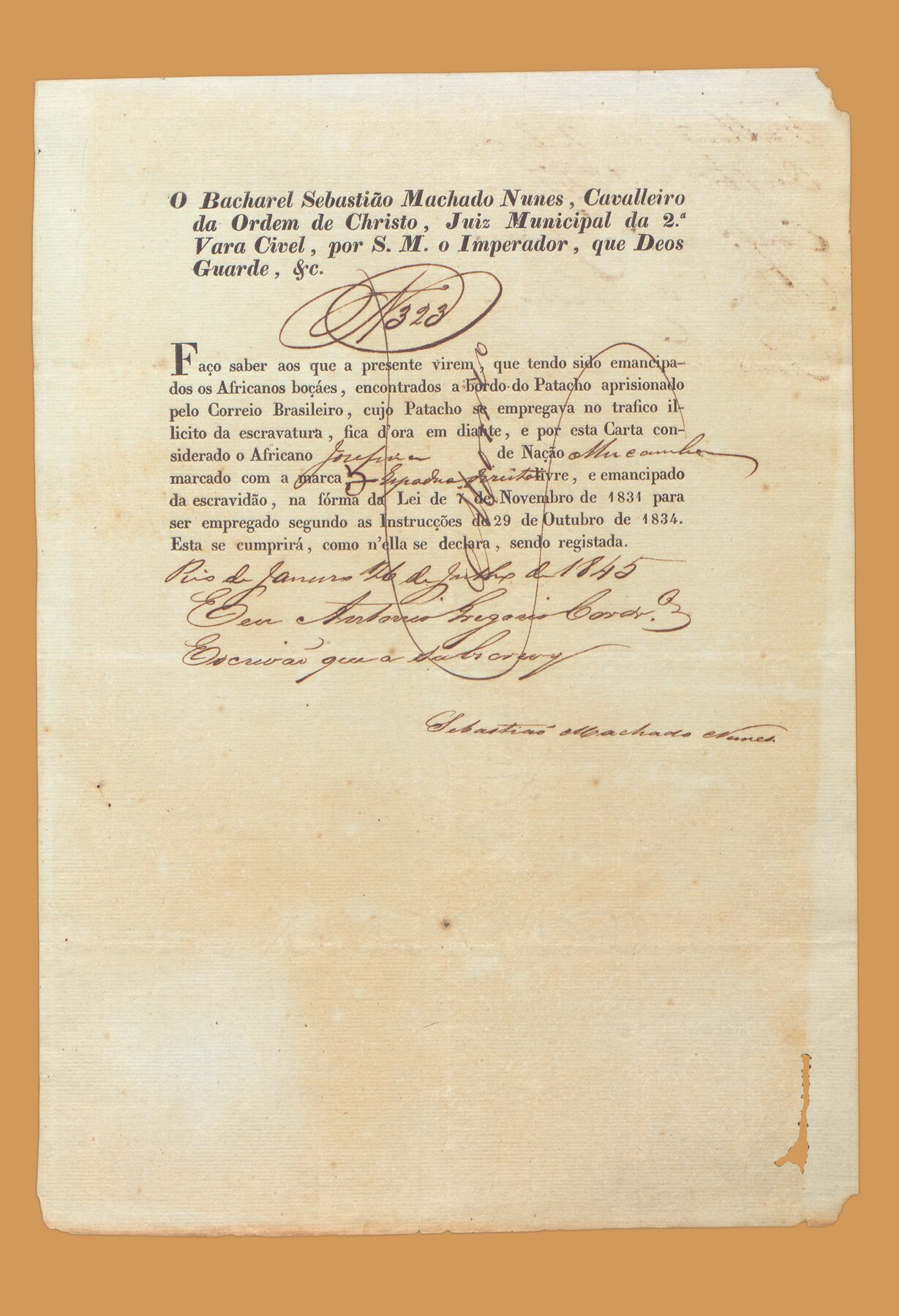
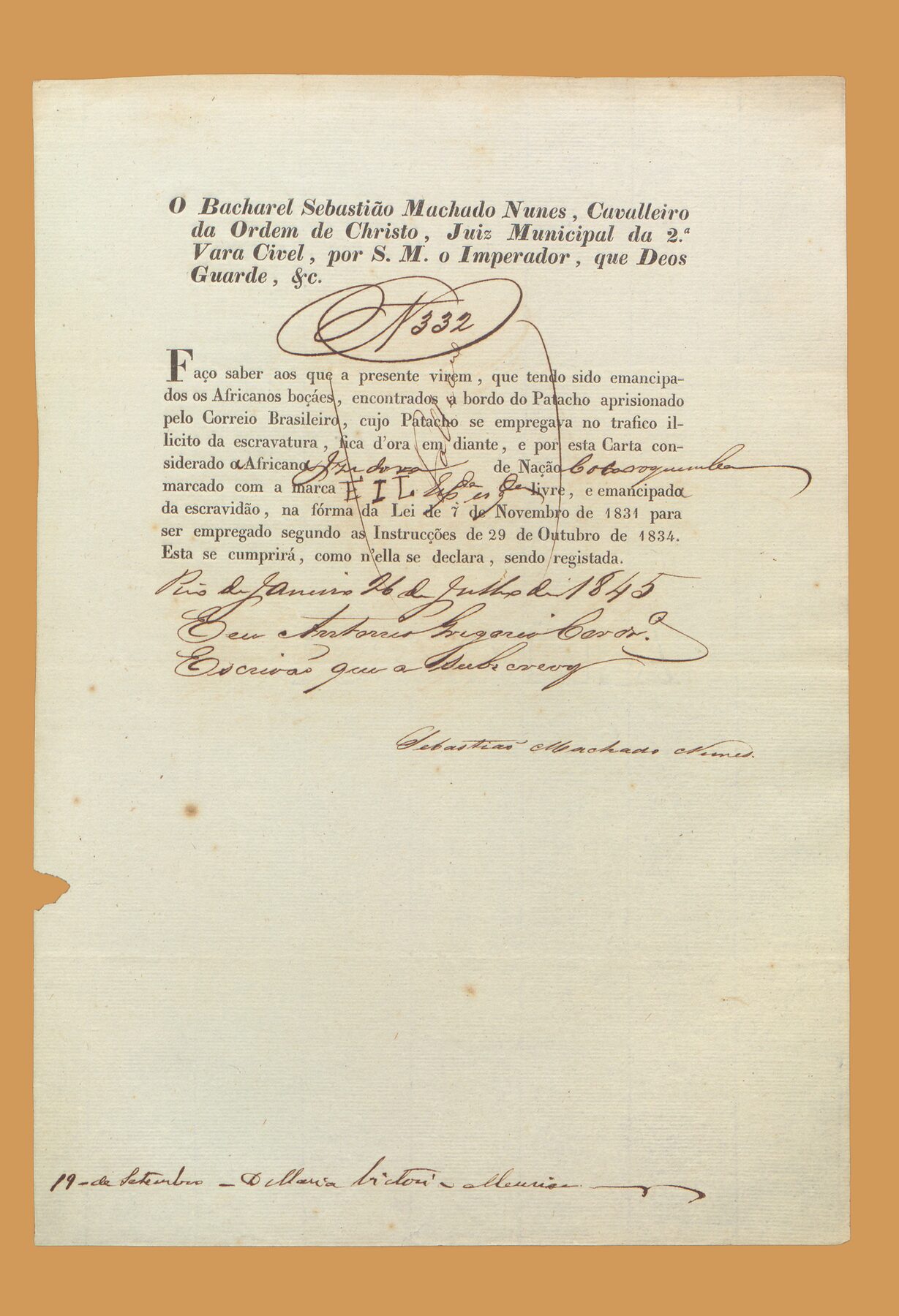
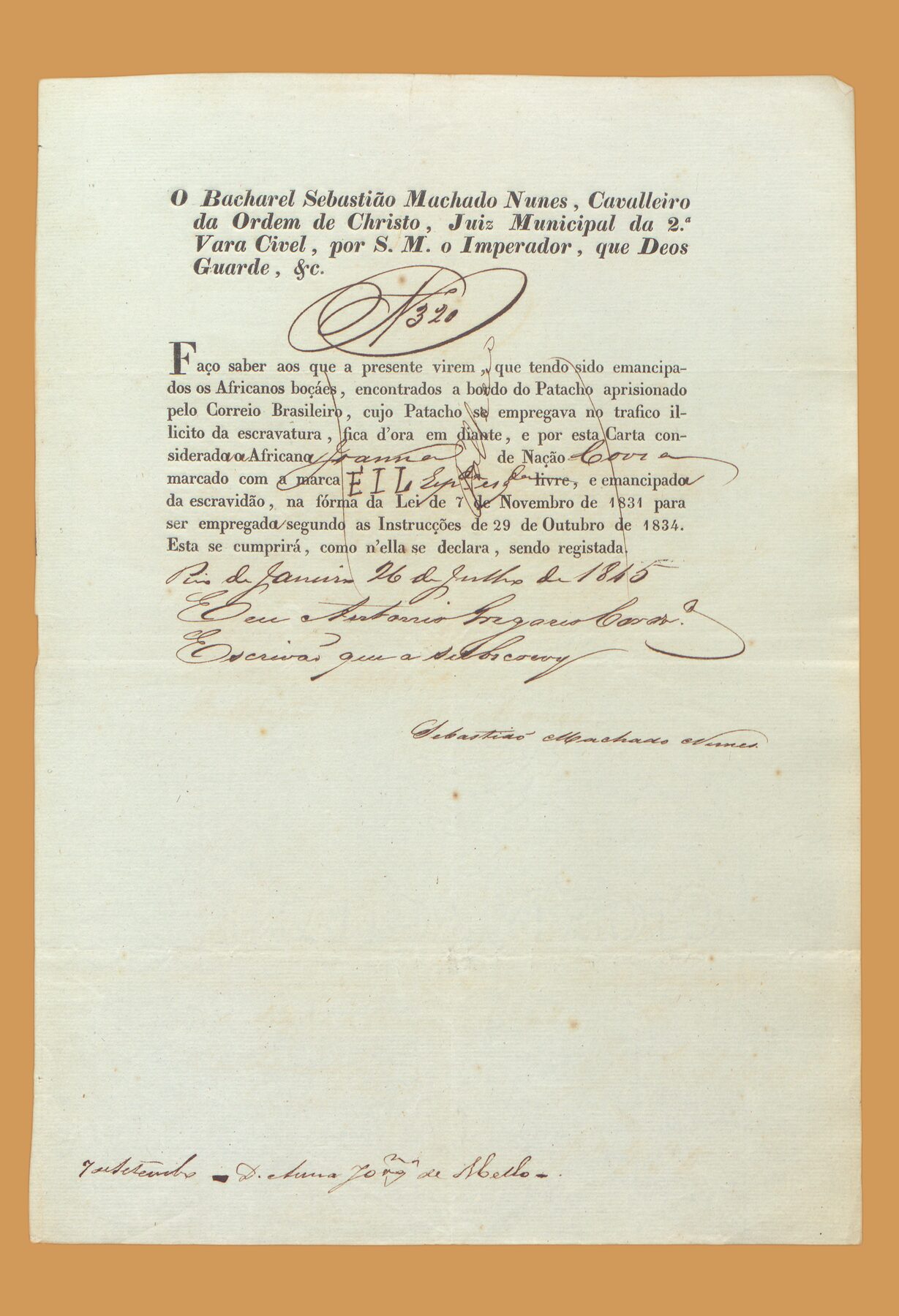
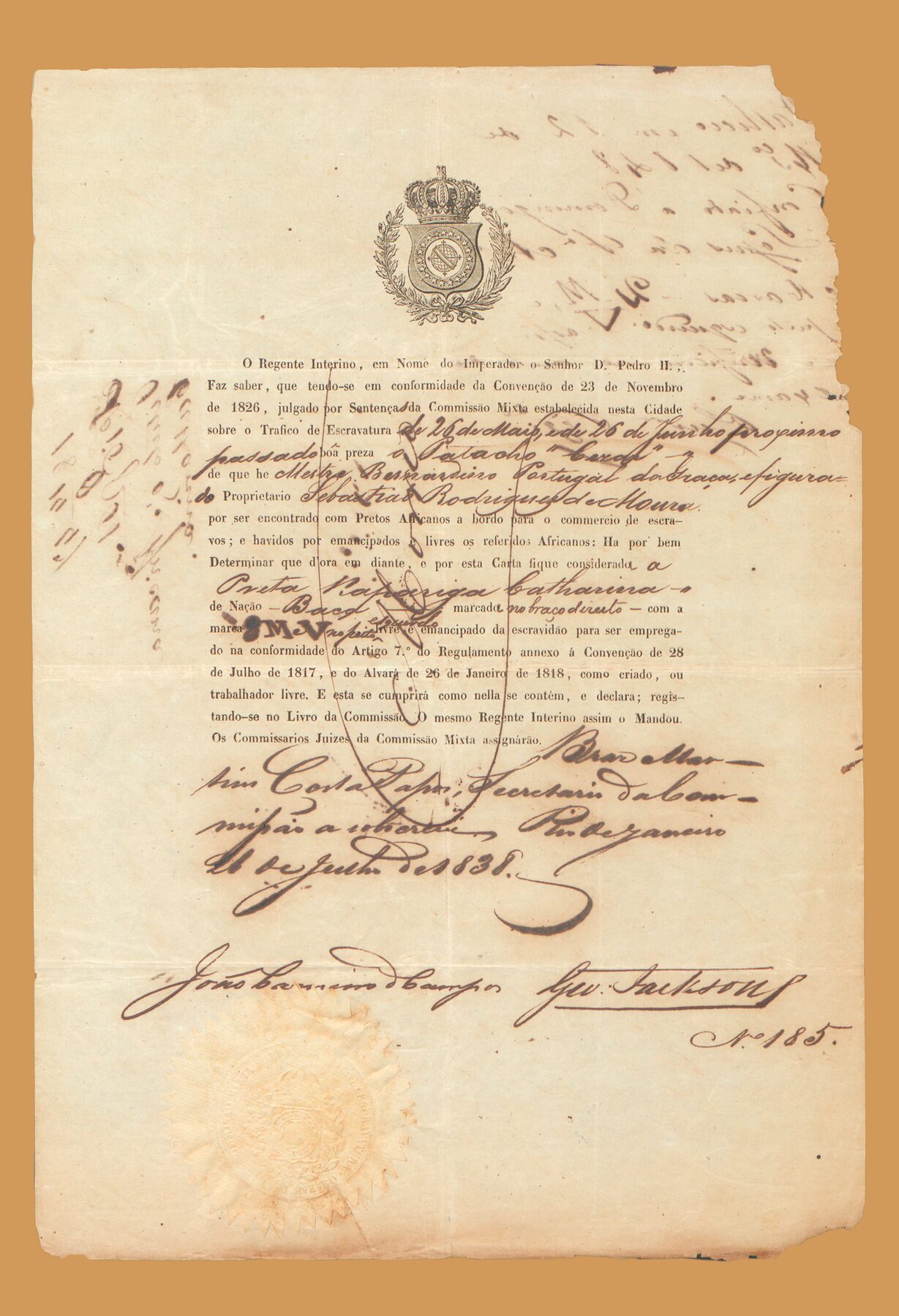
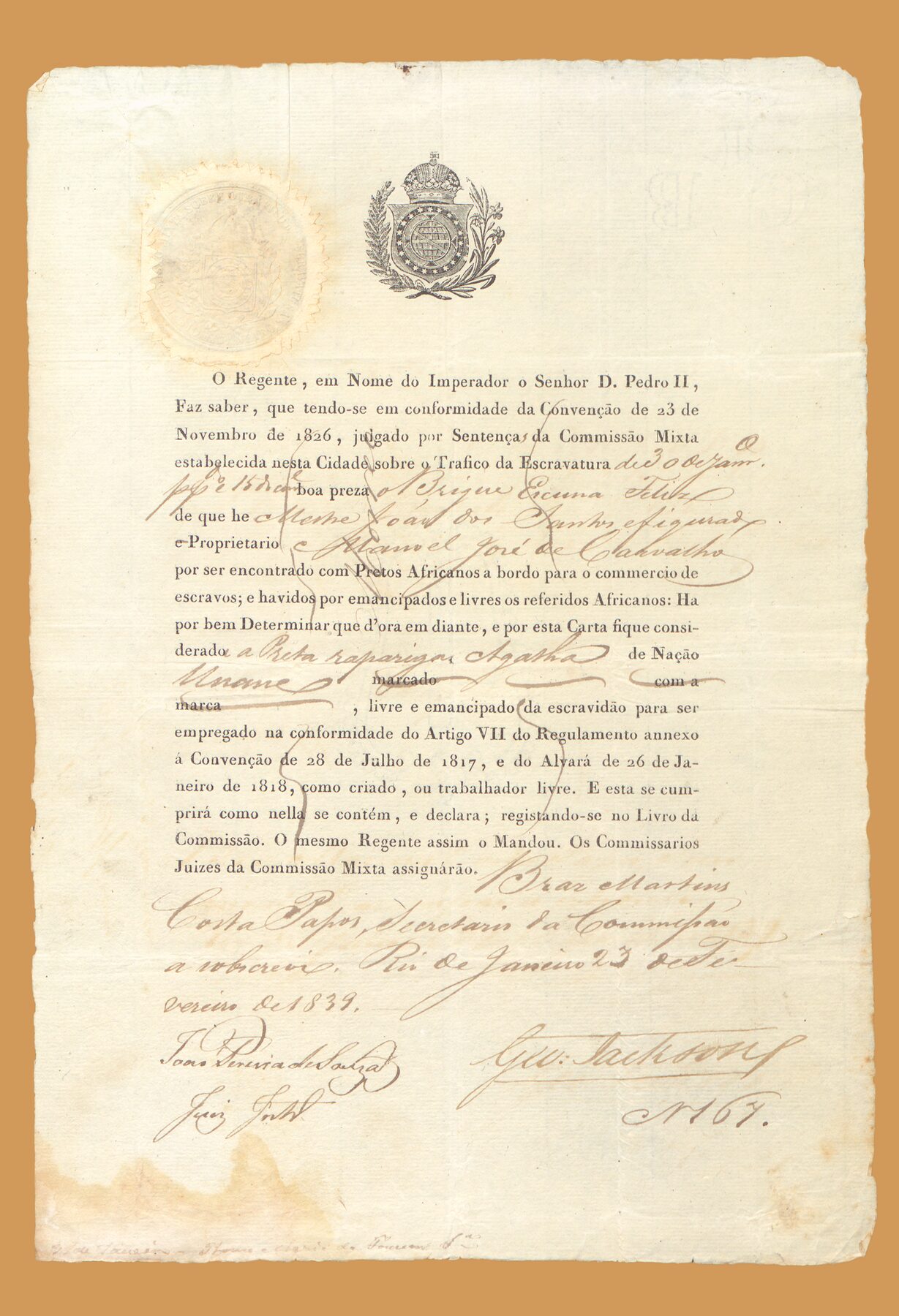
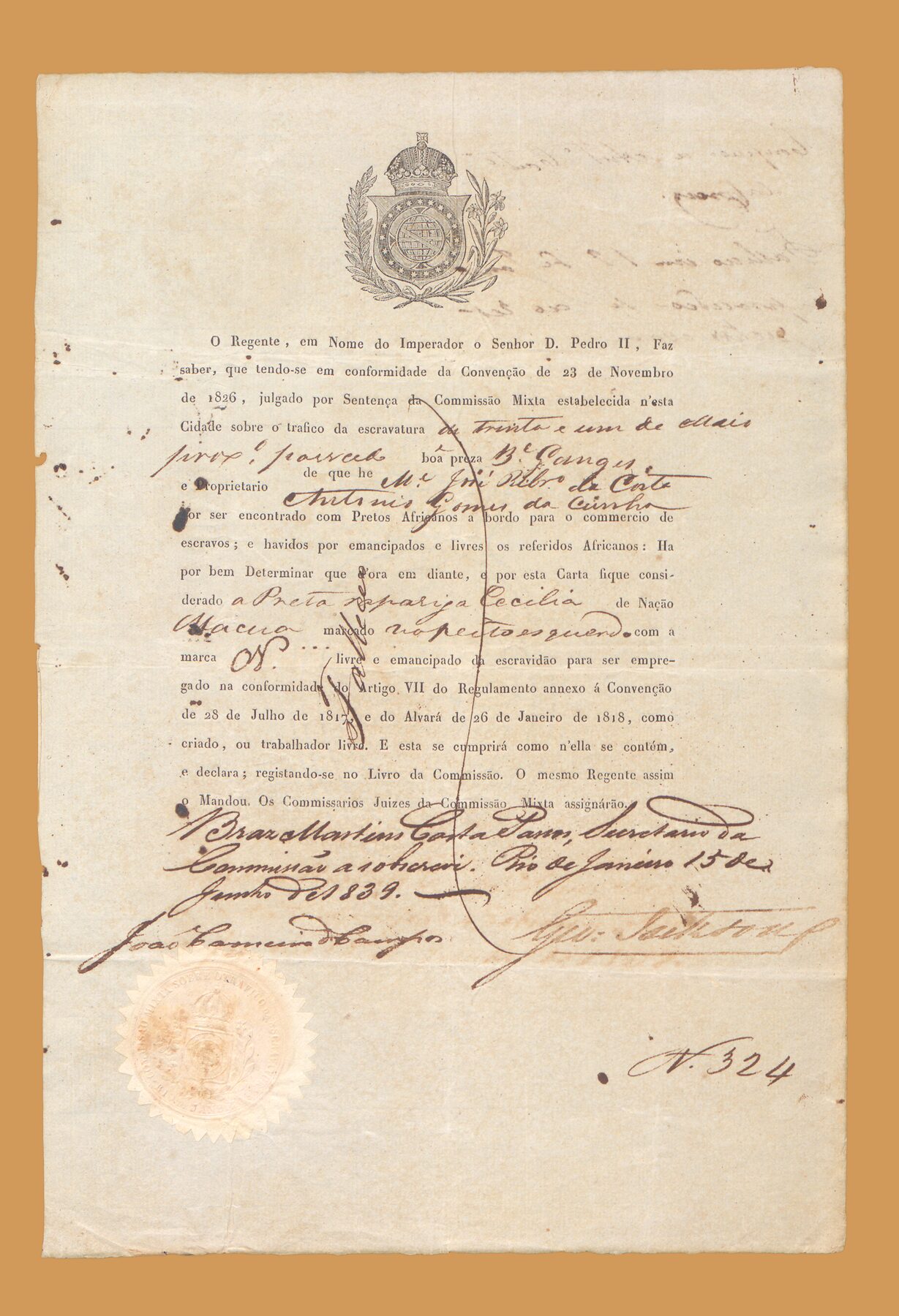
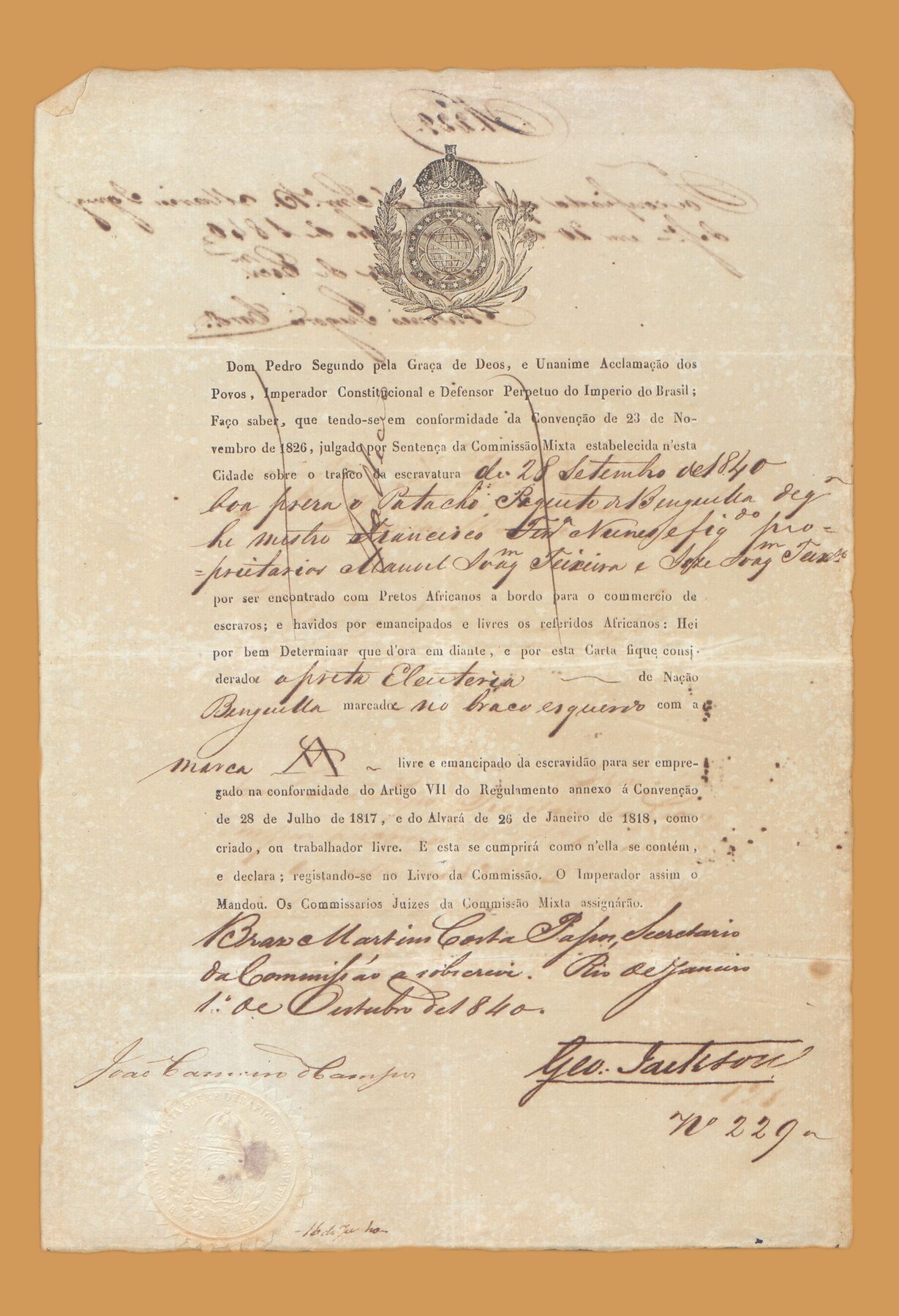
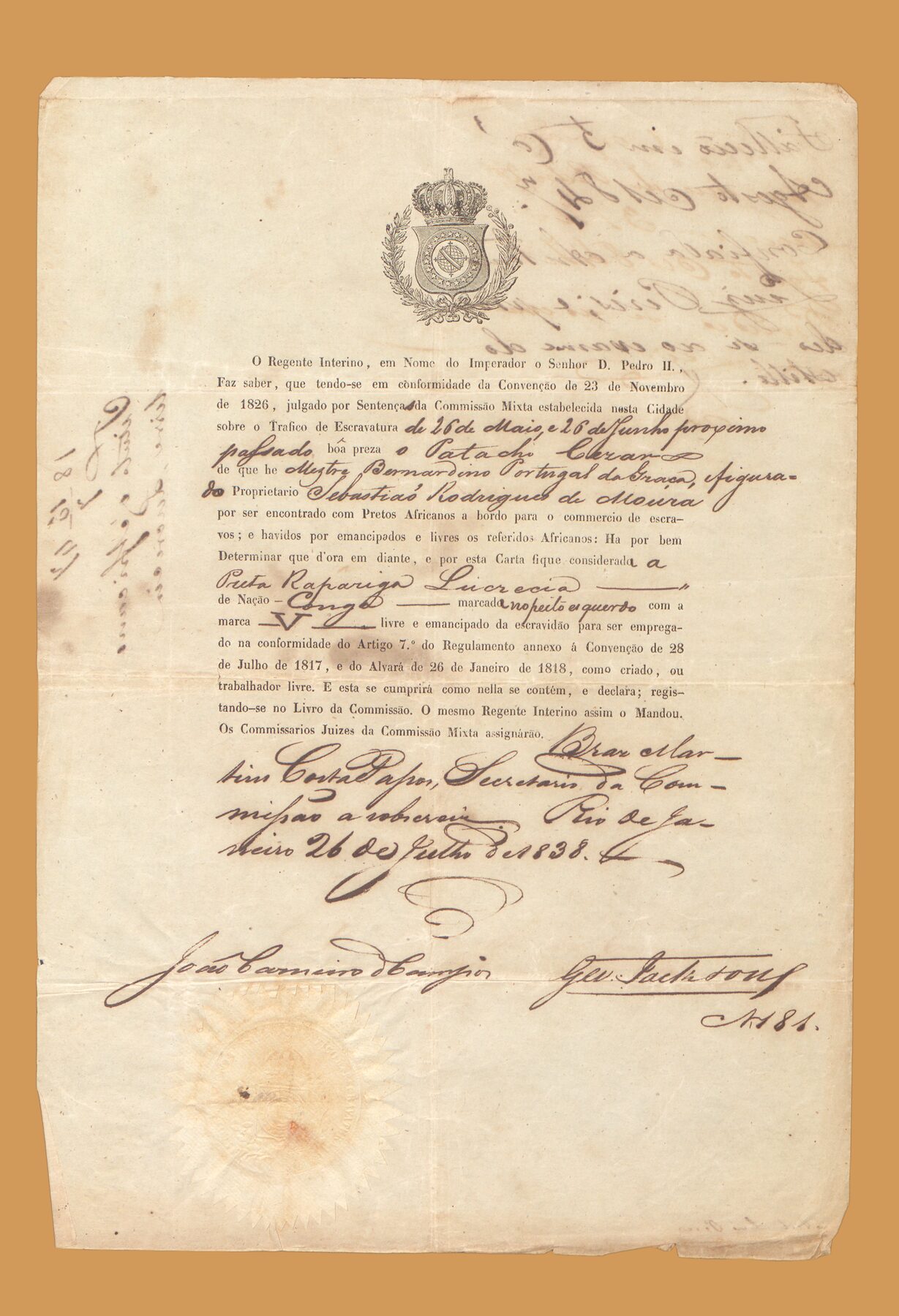
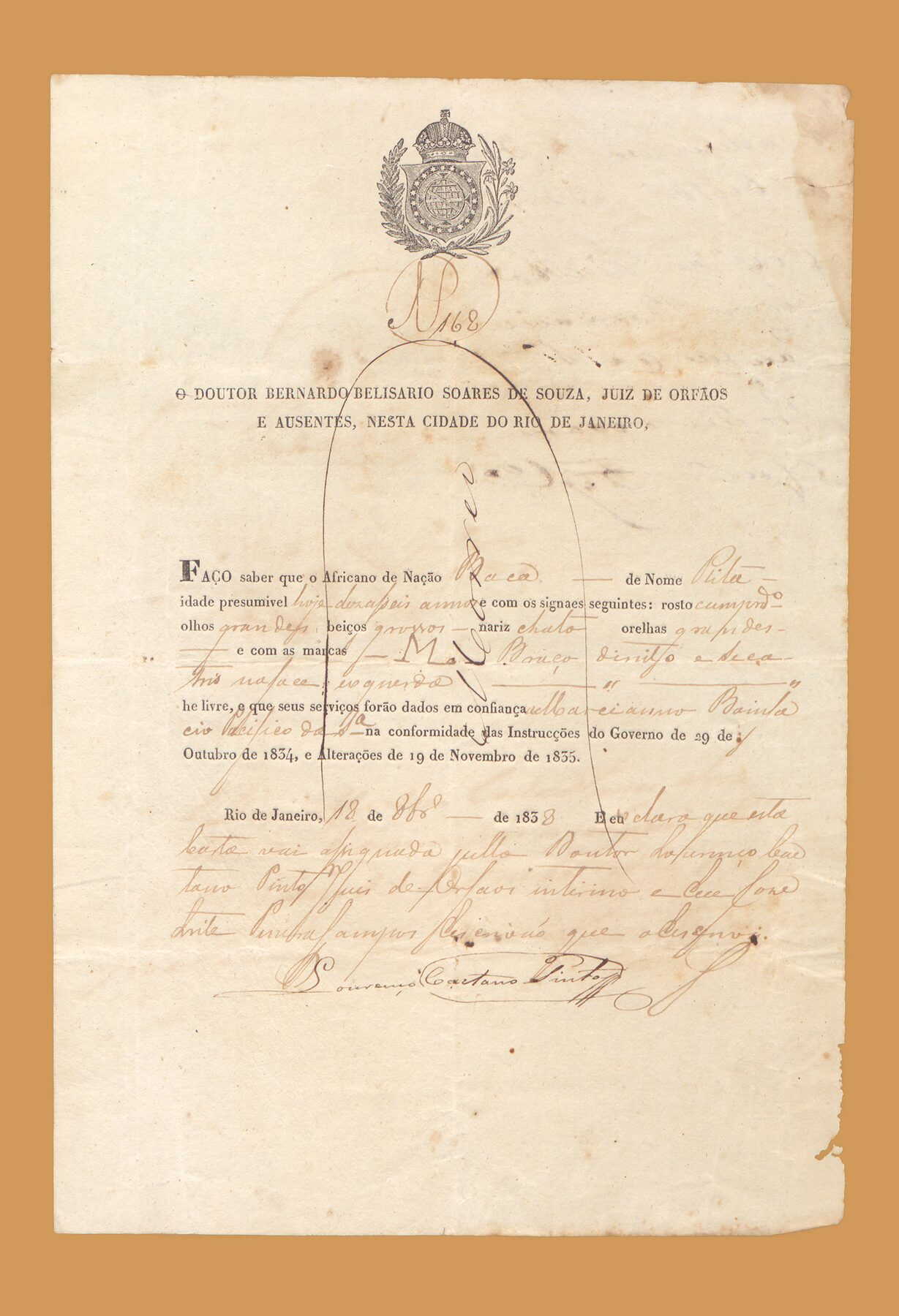
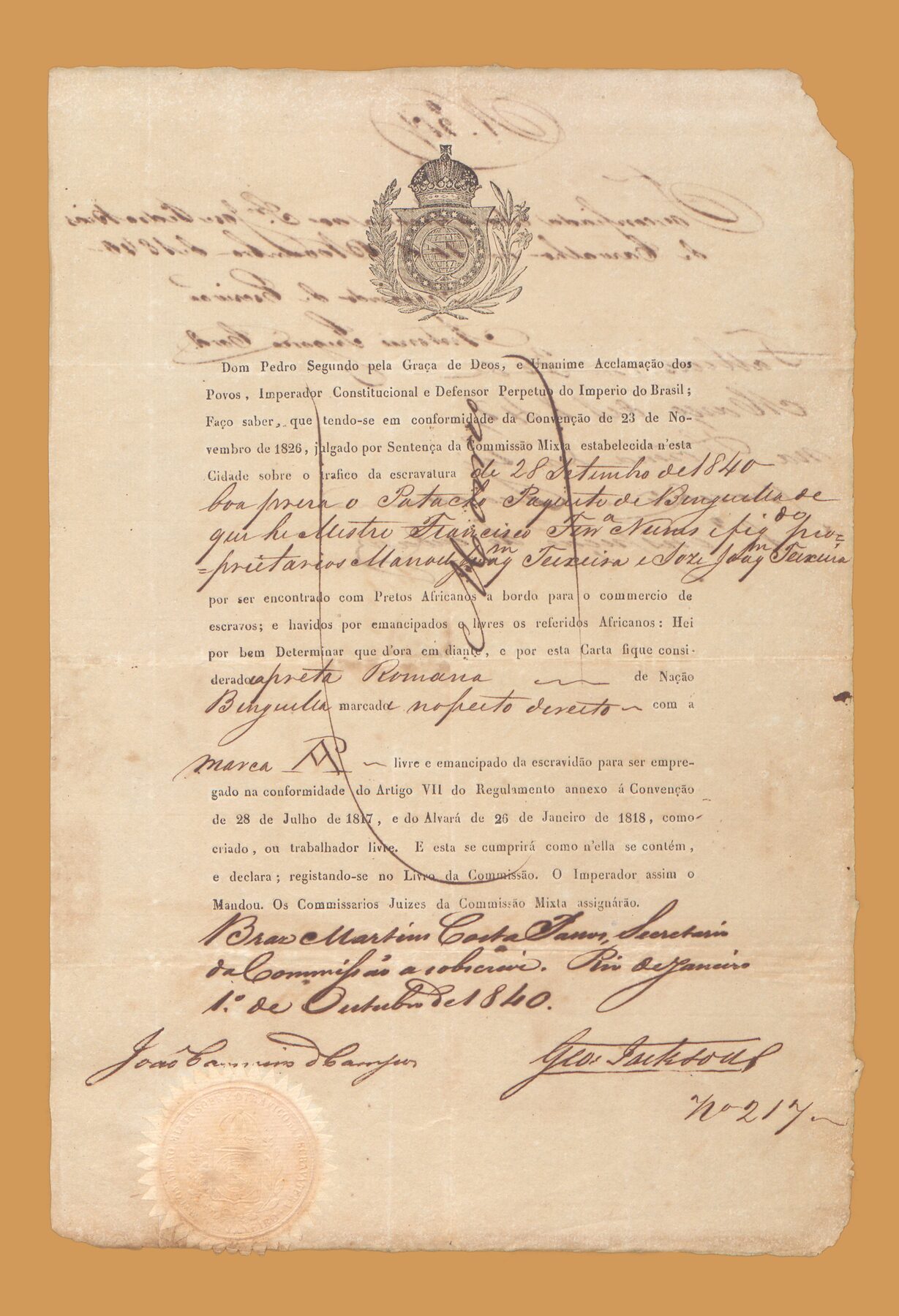
The emancipation letters of Liberated African women that have survived the passage of time record sad stories. They were issued by the Anglo-Brazilian Joint Commission or by the Orphan Courts when people found aboard seized slave ships were formally emancipated. Each person is identified by a Christian name (disregarding any previous name), their country of origin, body marks, and, in some cases, a physical description. The free African women Romana Benguela, Agatha Unane, and the others died prematurely. Their letters are on display here because they were returned to the Ministry of Justice, archived, and thus preserved for posterity.
Beatriz Mamigonian
Josefina
Isadora
Joana
Catharina
Agatha
Cecilia
Eleuteria
Lucrecia
Patricia
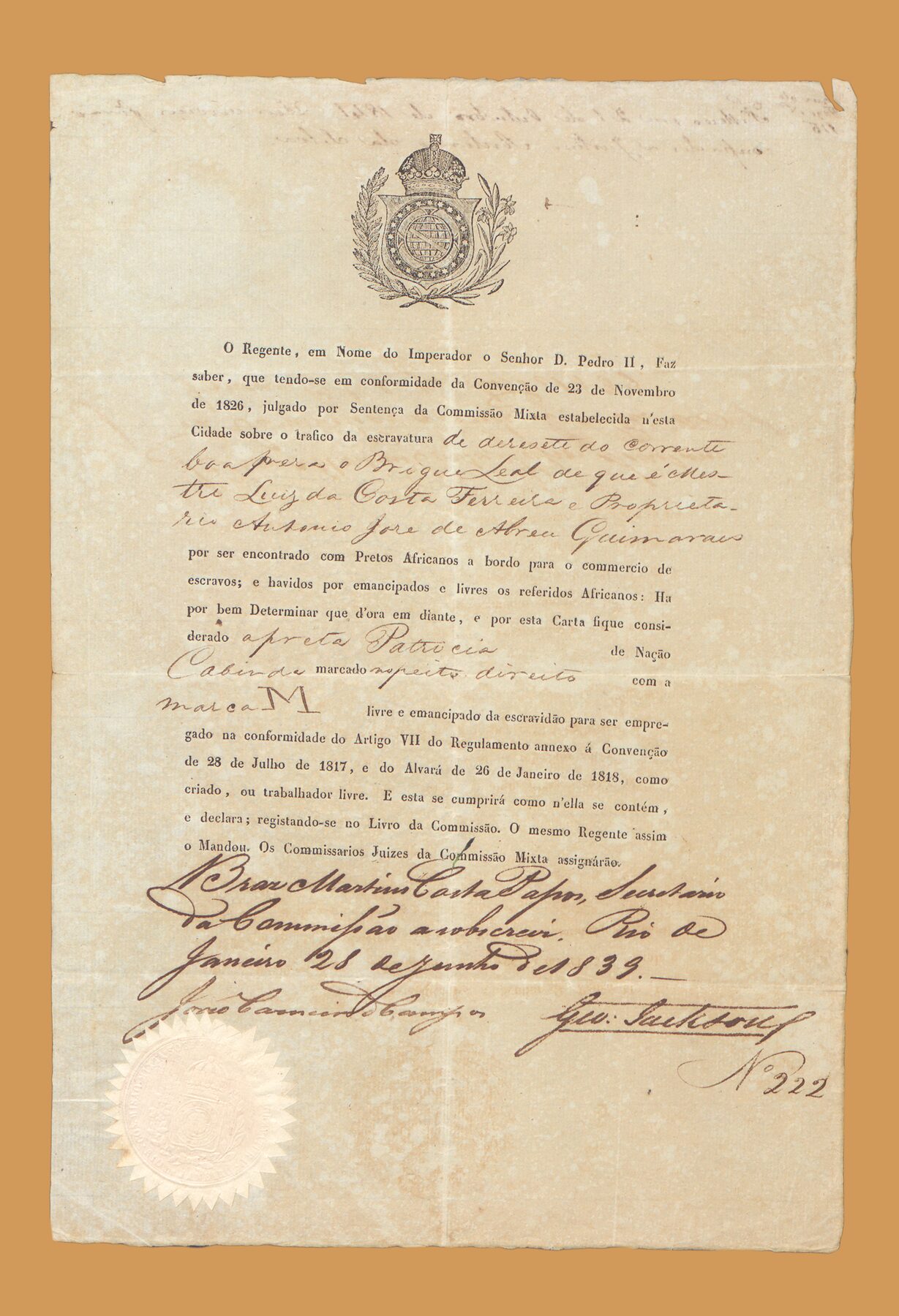
Rita
Romana
Slave ships Asseiceira and Camargo
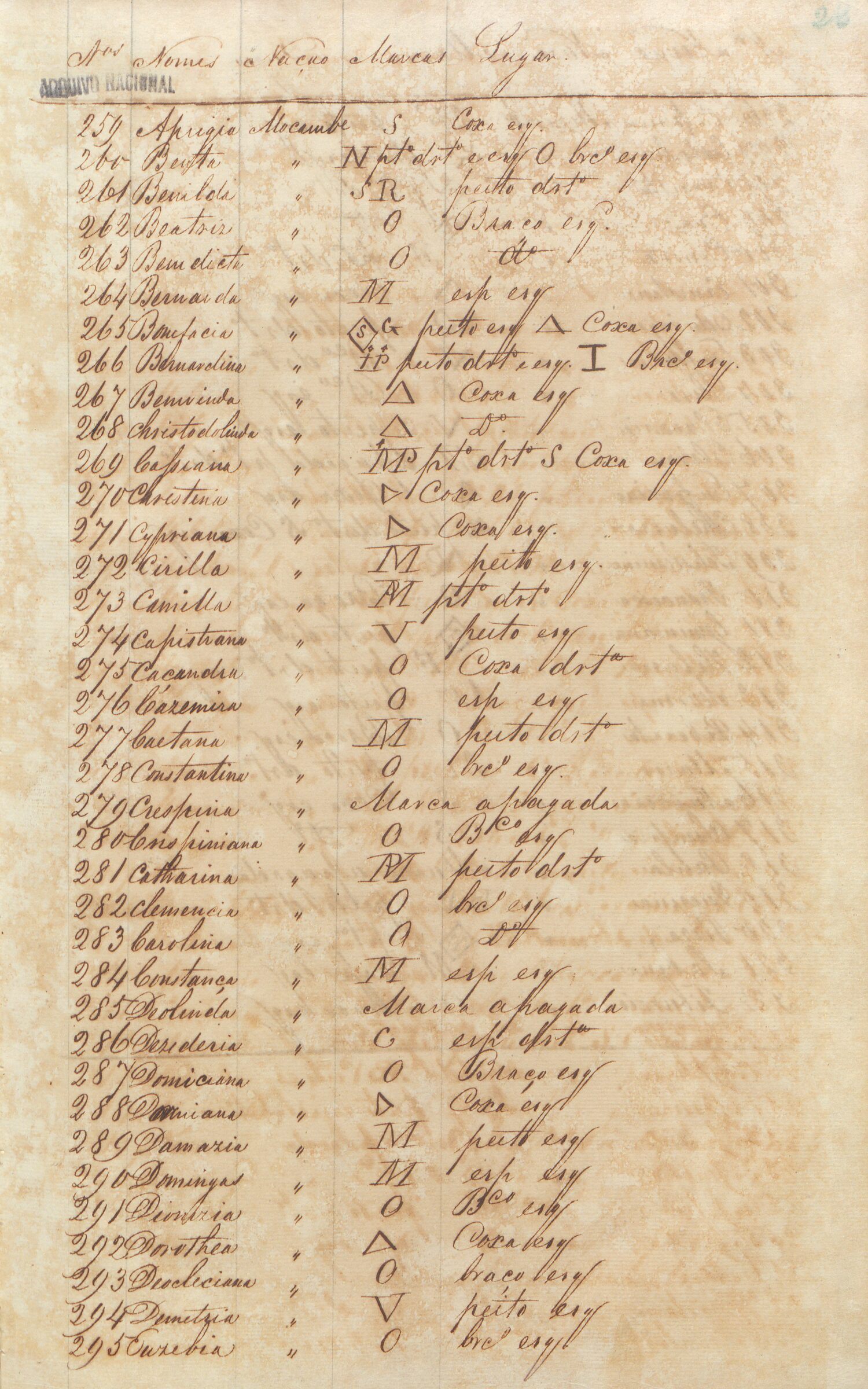
Page 1. List of 322 free Africans who arrived aboard the brig Asseiceira. Starting with No. 246, the list includes women. Rio de Janeiro, March 13, 1841. Various Codices. National Archives.
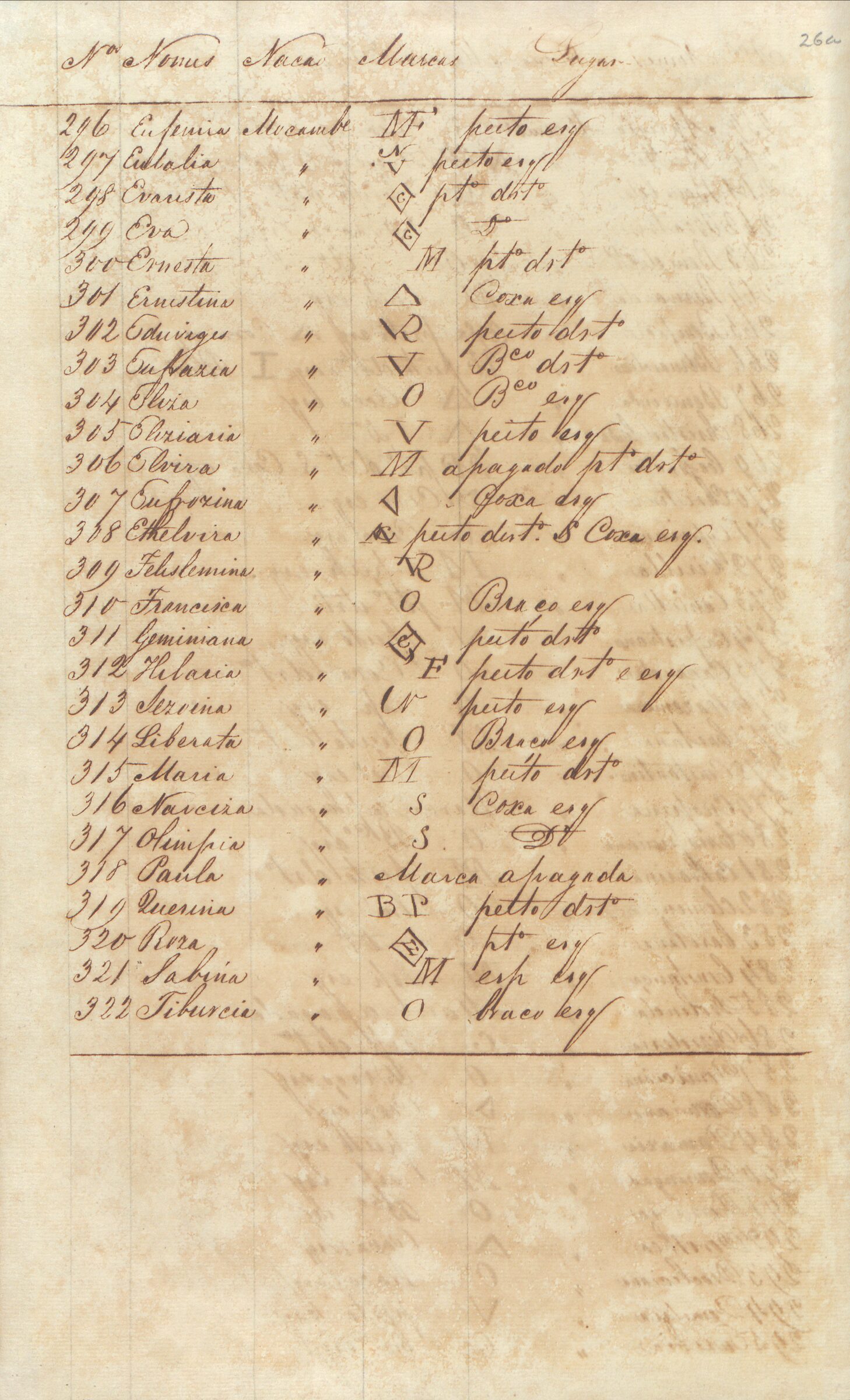
Page 2. List of 322 free Africans who arrived aboard the brig Asseiceira. Starting with No. 246, the list includes women. Rio de Janeiro, March 13, 1841. Various Codices. National Archives.
Page 3. List of 322 free Africans who arrived aboard the brig Asseiceira. Starting with No. 246, the list includes women. Rio de Janeiro, March 13, 1841. Various Codices. National Archives.
List of 34 free Africans, including Claudina, Domingas, Felícia, Antonia, Luiza, Bernarda, and Thomazia, who arrived aboard the brig Camargo. Rio de Janeiro, April 12, 1853. Justice Series, National Archives.
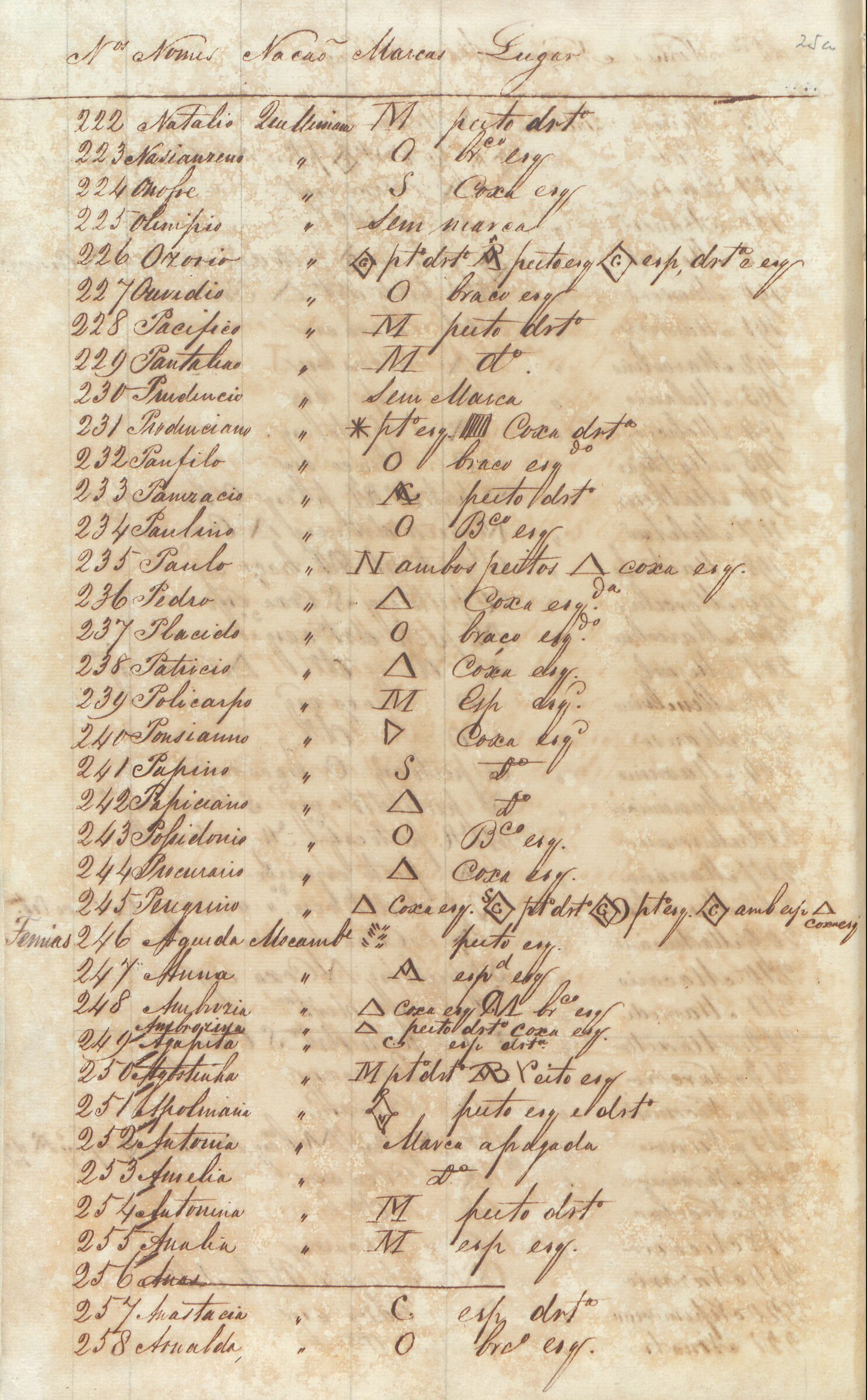
Page 1. List of 322 free Africans who arrived aboard the brig Asseiceira. Starting with No. 246, the list includes women. Rio de Janeiro, March 13, 1841. Various Codices. National Archives.
Page 2. List of 322 free Africans who arrived aboard the brig Asseiceira. Starting with No. 246, the list includes women. Rio de Janeiro, March 13, 1841. Various Codices. National Archives.
Page 3. List of 322 free Africans who arrived aboard the brig Asseiceira. Starting with No. 246, the list includes women. Rio de Janeiro, March 13, 1841. Various Codices. National Archives.
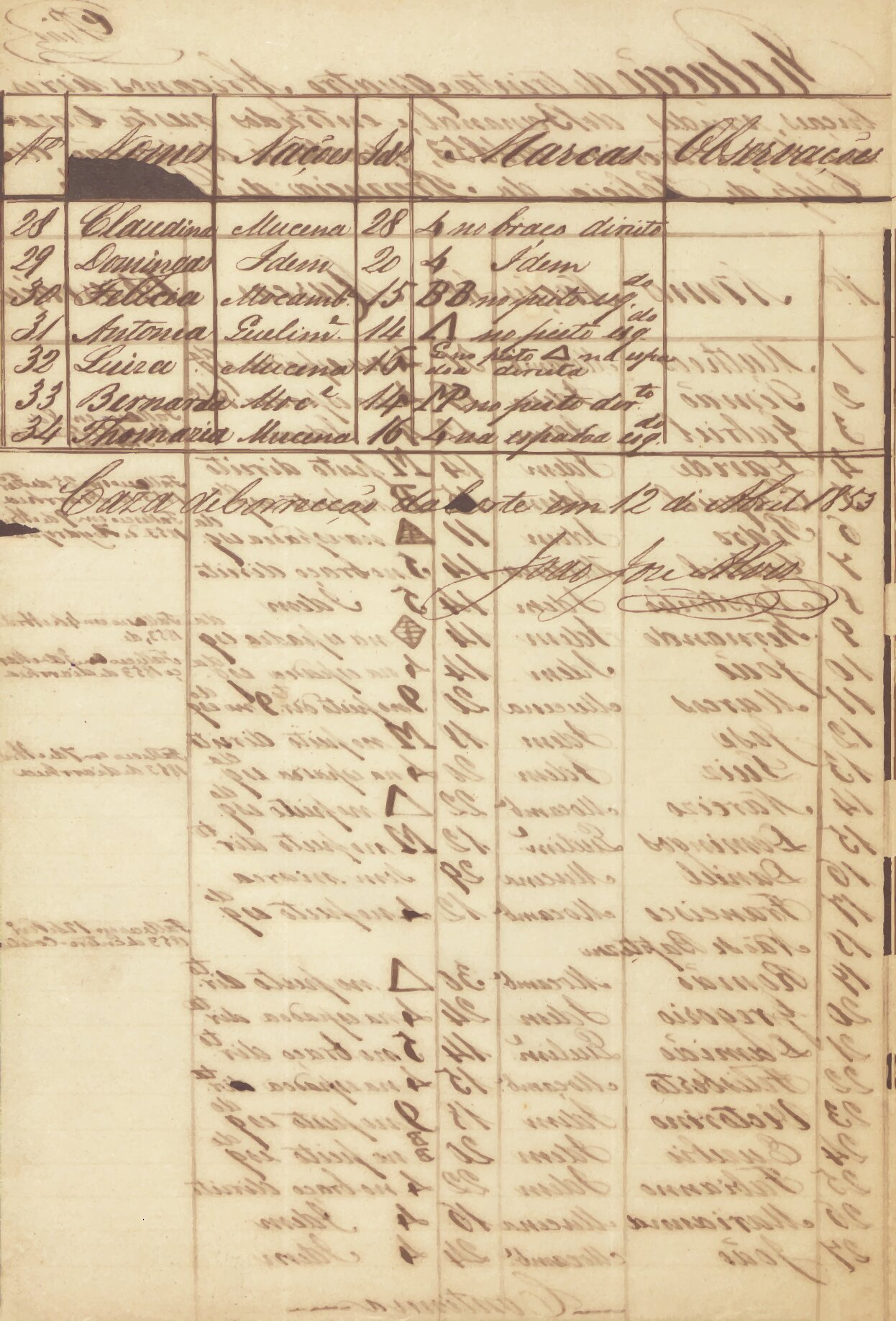
List of 34 free Africans, including Claudina, Domingas, Felícia, Antonia, Luiza, Bernarda, and Thomazia, who arrived aboard the brig Camargo. Rio de Janeiro, April 12, 1853. Justice Series, National Archives.
In October and November 2025, we held discussion groups with women workers of the National Archives to collectively review the freedom lawsuits selected for the exhibit. Watch reflections from some of these women about their trajectories, their feelings upon hearing the stories preserved in the National Archives, and their daily experiences with racism and their struggle for racial equality in Brazil.
Laís Rocha
Thaina Garcia
Patrícia Conceição
Maria Elisa Bustamante
Raissa Sabiá
Flávia Silva
Letícia Pimentel
Marilena dos Santos
Christiane Alvarez
Nadja Parentes
Ana Lígia Mendonça
Rosane Coutinho
Read the commentary by exhibition curator and historian Keila Grinberg.
Liberata’s story is tragically familiar in slaveholding Brazil. As a child, enslaved, she was forced into sexual relations with the man who claimed to be her master. He never fulfilled his promise to free her.
Liberata was only twenty-three when she turned to the courts—“a promise is a debt,” I imagine her arguing. She secured her liberty and lived to witness the emancipation of her children, who, though born free, had been illegally enslaved.
I read Liberata’s case more than thirty years ago. Her strength still moves and inspires me. She did not resign herself; she resisted threats and fought for both her and her children—as did nearly all enslaved women of her time.